


Life Transitions: 8 Tips for Getting Through Tough Times
Life transitions are usually life changing events that cause us to re-examine our present sense of who we are. Although life transitions can happen at any age, many people will experience significant life transitions during mid-life or at retirement.
What is a Life Transition?
Life transitions are usually life changing events that cause us to re-examine our present sense of who we are. Although life transitions can happen at any age, many people will experience significant life transitions during mid-life or at retirement.
Examples of Life Transitions
Getting married
Pregnancy / Becoming a parent
Divorce or relational separation
Leaving parent’s home or moving to new home
Empty nest syndrome
Change in career or loss of career
Health changes / serious illness
Significant loss (person, pet, or anything important)
Retirement
If Life Transitions are normal, why do I feel so overwhelmed?
Transition means change. We are resistant to change. Most of us like predictability in our everyday lives. The unknown causes us fear and stress. We feel vulnerable. There can be a sense of grief or loss.
Are there any positives?
Changes, especially difficult changes, can promote personal growth. Dealing with a change successfully can leave a person stronger, more confident and better prepared for what comes next in life. Even unwanted or unexpected changes may produce beneficial outcomes.
You might gain new knowledge or develop new skills as the result of life transition. These changes might allow you to discover what’s important in your life and assist you in achieving greater self-awareness.
Coping with Change
Someone facing change may also experience depression, anxiety, changes in eating habits, trouble sleeping, or abuse of alcohol or drugs. If these symptoms persist or change disrupts normal coping mechanisms and makes it difficult or impossible for person to cope with new circumstances, a person may be diagnosed with an Adjustment Disorder. Symptoms typically begin within 3 months of the stress or change. It’s important to seek immediate assistance if you are engaging in reckless / dangerous behaviors or having thoughts of suicide—call 911.
Therapy for Change
A therapist may incorporate a variety of techniques such as emotionally focused therapy, cognitive behavioral therapy, acceptance commitment therapy or motivational interviewing. A therapist will assist in treating stress, anxiety and depression while exploring new coping strategies with the client.
How can I cope with Life Transitions?
Understand that while Life Transitions are difficult, they can promote positive outcomes
Accept that change is a normal part of life
Identify your values and life goals
Learn to identify and express your feelings
Expect to feel uncomfortable
Take care of yourself
Build a support system
Don’t hurry- focus on rewards
Acknowledge what’s been left behind
If you are struggling with a Life Transition or significant change in your life, you may benefit by engaging in therapy with a professional counselor. Together you can identify your feelings, process the potential changes and formulate goals in order to move forward in your life.

Book Review: Rising Strong by Brené Brown
Before I get to the book review, I want to be completely honest with our readers about my own personal biases. I am a big Dr. Brene Brown fan and have been for years. I tried to go to her live event in Nashville, TN and was heartbroken to learn that the tickets were sold out so far in advance. I contacted Random House to see if I could talk my way in to no avail, but they did send me a prerelease copy and asked if I wanted to review Rising Strong on our blog. I absolutely said yes. I am going to give an overview and review of the book, and then share my experience of reading the book. Also, just to be clear, this is not a sponsored post.
Before I get to the book review, I want to be completely honest with our readers about my own personal biases. I am a big Dr. Brene Brown fan and have been for years. I tried to go to her live event in Nashville, TN and was heartbroken to learn that the tickets were sold out so far in advance. I contacted Random House to see if I could talk my way in to no avail, but they did send me a prerelease copy and asked if I wanted to review Rising Strong on our blog. I absolutely said yes. I am going to give an overview and review of the book, and then share my experience of reading the book. Also, just to be clear, this is not a sponsored post.
Rising Strong
Dr. Brene Brown, research professor at the University of Houston and CEO of the Daring Way, adds to and builds on her previous work (I Thought It Was Just Me, The Gifts of Imperfection, Daring Greatly) in her new book, Rising Strong. I highly recommend that you read the others as well, but this book is still significant on it’s own. Through her interviews with thousands of people, she developed Rising Strong. The goal of the Rising Strong process is, “to rise from our falls, overcome our mistakes, and face hurt in a way that brings more wisdom and wholeheartedness” (2015, p. 40). This is described as a very messy three-step process:
The Reckoning: We need to identify and have an awareness of our emotions. Then we allow ourselves to be curious about our emotions and look for how they connect to our patterns of thought and behavior.
The Rumble: This is getting very honest about the stories we tell about others and ourselves. We have a tendency to fill in the information gaps in our narratives, which is likely not accurate. It is very important that we believe that people really are doing the best they can with their lives. We need to challenge our initial reactions and look for a deeper level of understanding.
The Revolution: Once we have rumbled with and owned our story, we then can rewrite the ending by growing and learning from what we have learned. Dr. Brown writes:
Men and women who rise strong integrate the key learnings that emerge from the rising strong process into how they live, love, lead, parent, and participate as citizens. This has tremendous ramifications not only on their own lives, but also for their families, organizations, and communities. (p. 41)
The process of applying your new insights will revolutionize your world.
Critical Review
Dr. Brown has a very connectable approach to her writing and weaves in a number of personal stories that make this process human. Her work is brilliant, unassuming, and yet still feels like it could be a great conversation with a best friend over coffee. This is not your typical academic research book filled with complex methodologies and two-way ANOVAs. Dr. Brene Brown has managed to take her complex grounded theory research and translate it into concepts that are useful for anyone with a soul.
On the other hand, if you are a super academic social scientist type person, she does not fully explain her entire methodology and provide all the explicit details of that process. However, this would not be appropriate to her audience. I do appreciate the fact that she lists all of her references in the back of the book. You can further your reading and double-check many of the statements she makes if you have concerns. I value that level of research transparency and how she has put her work out there for criticism. She also includes highlights from her other works at the end of the book.
My Own Experience
I noted several significant takeaways in the process of reading this book. Actually, there are too many to mention, so I will give some highlights.
It is very important to teach our children the truth of our stories and our family histories because it is their story. Nostalgia can be deadly.
The term chandeliering is one consequence of ignoring our own emotional pain. The term describes when a minor comment or conflict triggers a pain so great that we “jump as high as the chandelier” with our emotional response (p. 60). Some examples are road rage or even losing it at a sporting event. Dr. Brown writes:
Chandeliering is especially common and dangerous in “power-over” situations-environments where, because of power differentials, people with a higher position or status are less likely to be held accountable for flipping out or overreacting…Most of us have been on the receiving end of one of these outbursts. Even if we have the insight to know that our boss, friend, colleague, or partner blew up at us because something tender was triggered and it’s not actually about us, it still shatters trust and respect. (p. 61-62)
I enjoyed all of the personal stories. I cherished from my family systems background the insight into Dr. Brown’s family of origin. What moved me most was the account of her mother having a life altering counseling experience that was then translated into her parenting. It is a reminder that we can all change our family trees and break negative intergenerational patterns.
On spirituality, I also had a few notes. Dr. Brown’s work suggests that no specific church denomination was more shaming than others. Over half of her participants who experienced spiritual shaming ended up finding healing through spirituality. They changed churches or beliefs, but their faith was still a significant part of who they are.
Some items I need to reflect on personally after reading this are having the courage to communicate what works for me (what I need) and renewing my faith that people are doing their best at all times. As a lover of Narrative Therapy, I am all for reauthoring our own stories.
Dr. Brown, If You Are Reading This…
On the one in a million chance that Dr. Brown actually sees this someday, thank you for the impact that you have had on me professionally and personally. As a fellow introverted qualitative researcher (the best kind of course), your example gives me hope that I do not have to be the life of the party to have an impact on this world.
What you wrote about the negative view of qualitative research held by many academics struck a chord with me. I do not think that has completely changed from when you defended your dissertation, but I do feel it has gotten better. My dissertation was qualitative and fully embraced by my committee, with one member even stating he will only chair qualitative work. When we break massive amounts of information down into these tiny measurable things, I think we lose so much significant information. Thank you for blazing a trail by making qualitative research not only more accepted, but cool!
Personally, I discovered your work during the process of writing my dissertation. I actually quoted you several times in my study of therapists’ martial experiences and included my own marriage. Talk about a rumble experience! Looking at my own marriage and myself was the darkest and most difficult process I have ever been through. If I had not read Daring Greatly, I would not have had the courage to be vulnerable and include my own marriage in the study. Now, I cannot imagine my marriage had we not done that “day two” work.
I cannot say enough good things, so please go buy RISING STRONG today! Comment below if you love Dr. Brene Brown’s work. How has it impacted your life?
Reference
Brown, B. (2015). Rising Strong. NY: Penguin Random House.

Coping with COVID 19: Is My Current Sadness Really Grief?
Are you having trouble identifying your feelings during the COVID 19 pandemic? You might be experiencing grief. In a recent Harvard Business Review, foremost expert on grief and author David Kessler, states there is a 6th stage of grief. Kessler co-wrote with Elisabeth Kubler-Ross about the 5 stages of grief—denial, anger, bargaining, depression and acceptance. In Kessler’s new book, Finding Meaning: The Sixth Stage of Grief, he says that after acceptance stage there can be meaning. He is also the founder of www.grief.com.
Are you having trouble identifying your feelings during the COVID 19 pandemic? You might be experiencing grief. In a recent Harvard Business Review, foremost expert on grief and author David Kessler, states there is a 6th stage of grief. Kessler co-wrote with Elisabeth Kubler-Ross about the 5 stages of grief—denial, anger, bargaining, depression and acceptance. In Kessler’s new book, Finding Meaning: The Sixth Stage of Grief, he says that after acceptance stage there can be meaning. He is also the founder of www.grief.com.
Kessler states that:
We are feeling a number of different griefs, it feels like the world has changed and it has. We are hoping it’s only temporary but it doesn’t feel that way. There’s a loss of normalcy; fear of economic toll; and the loss of connection. We are not used to this kind of collective grief in the air.
We may also be feeling anticipatory grief because the future is uncertain. Typically, this happens with an impending death or receiving a dire diagnosis. Anticipatory grief is confusing. We know there’s potential for bad things to happen. We sense a loss of safety, but we can’t see it. We no longer feel safe.
It’s important to understand that there isn’t a map for grief or for the grieving. People manage their grief in different ways and in unpredictable timelines. I won’t get the virus—denial. I have to miss my activities and stay home—anger. If I social distance for two weeks, I’ll be fine—bargaining. Will this ever end? —sadness. Ok, I have to figure this out—acceptance. We find power in acceptance.
Unhealthy anticipatory grief is really anxiety about the unknown. We imagine future worst-case scenarios. We don’t want to dismiss this anxiety. The goal needs to be finding balance in the things you are thinking. Not everyone who gets sick, will die. By staying in the moment, being mindful, you can calm yourself. Name five objects in the room. Breathe. I’m okay.
Let go of what you can’t control. Be compassionate. Be patient. People aren’t their “normal selves right now.” The most troubling part of this pandemic is the open-endedness of the situation. This is temporary even though it feels like forever.
Kessler identifies the sixth stage as finding meaning after acceptance. We want/need to find meaning in suffering. This might look different to different individuals, groups, and societies depending on their circumstances and experiences.
Take time to feel your emotions, name them and allow them to move through you. Leave the “would of, could of, should of” out of your feelings.
Most of us tend to identify grief in relation to a death. Grief can also be experienced from any loss —loss of relationship, loss of job/career, loss of home, loss of financial security, loss of a pet, and loss of a dream.
If you or someone you know is struggling with grief, it’s important to seek out professional help with a qualified therapist. What has been your hardest loss to cope with?
Resources
Berinato, S. (2020, March 23). That discomfort you’re feeling is grief. Harvard Business Review. https://hbr.org/2020/03/that-discomfort-youre-feeling-is-grief

Tele-what? Taking the Mystery Out of Telehealth Counseling
Life in the time of COVID. There are a multitude of extra stressors that are occurring right now. People are being stretched in ways that they didn’t know existed. You might be feeling totally exhausted, stressed to the brim, anxious about what is to come, having issues with everyone in your family being stuck in the house, or feeling like things are out of control. On top of this — the typical things in your life are still going on.
Now, more than ever, people need to be aware of their mental health, how it has been affected, and what resources are available to help combat this.
Life in the time of COVID. There are a multitude of extra stressors that are occurring right now. People are being stretched in ways that they didn’t know existed. You might be feeling totally exhausted, stressed to the brim, anxious about what is to come, having issues with everyone in your family being stuck in the house, or feeling like things are out of control. On top of this — the typical things in your life are still going on.
Now, more than ever, people need to be aware of their mental health, how it has been affected, and what resources are available to help combat this.
Tele-counseling is one option for working through your struggles, emotions, frustrations, or just processing through this difficult time. Like traditional counseling, telehealth provides the same support and encouragement that you would receive in an in-person session and allows you to maintain physical safety, follow the social distancing guidelines, and still receive the help you need.
Tele-counseling is different, there’s no denying that. However, current research suggests that tele-counseling is just as effective as traditional counseling. A study completed by Andrews, Basu, Cuijpers, Craske, McEvoy, English, and Newby in 2018 compared traditional Cognitive Behavior Therapy to internet-based Cognitive Behavior Therapy and found that both were equally effective for treating anxiety and depression.
Let’s answer some questions about tele-counseling!
Tele-counseling won’t be as personal as in-person.
Your therapist will work to ensure that the same therapeutic relationship is provided though the tele-counseling session. Your therapist will use the same skills and training that are used in a typical session to understand you and your goals, provide the therapeutic relationship, and help you to feel supported.
How do I know that this is private?
Summit Family Therapy uses a secure, HIPAA-compliant service to provide the video connection for therapy. The therapist will be in an office, the same as if you were in the office.
There are some tips to provide privacy on your end. Some people have private space in their home. You can use headphones to ensure that others are not able to hear the therapist’s responses. You might consider leaving your home and finding a different quite space. Use this as an opportunity to get out of the house while respecting social distancing. Maybe take a drive and stop somewhere with a nice view, a park, or your favorite spot. The beauty of tele-counseling is that you can be anywhere, as long as you have internet and privacy.
I don’t have a computer with a camera.
Great news! You don’t need to have a computer. You are able to use your phone, tablet, or other device to participate in your tele-counseling session. There is an easy to download app for both IOS and Android that can be downloaded to any device with a working camera. If you have trouble with this, we can support you through getting this downloaded and coaching you over the phone.
I am not tech-savvy, this will be too difficult.
The program we use is simple and easy to use. You will get a link to your email to go to your private, virtual waiting room. When it is time for your session, the therapist will join you there — just like when they would find you in the office waiting room. Once you are in the session, there is nothing more you need to do.
What if I don’t like it?
Just like any therapy, if you aren’t happy, you don’t need to continue. If you find that you are feeling uncomfortable during the session, bring this up! Your therapist can help to process this and help you to make the best decision, for you, to move forward.
What are the benefits of tele-counseling?
Just like any therapy, this is a relationship and the same benefits exist; however, there are added benefits of using tele-counseling:
• You can attend sessions from anywhere • There is no drive time to the office •
• More flexibility in scheduling • Less risk of exposure to illness •
• Easy to access • Limited wait time •
• No need to change out of your pjs • Be in the comfort of your own space •
More questions?
Do you have more questions? Would you like to talk to a professional about what tele-counseling would be like for you? Give us a call and we would happy to talk more about how tele-counseling can change your life!
Resources
Andrews, G., Basu, A., Cuijpers, P., Craske, M., McEvoy, P., English, C., & Newby, J. (2018). Computer therapy for the anxiety and depression disorders is effective, acceptable and practical health care: An updated meta-analysis. Journal of Anxiety Disorders, 55, 70-78. https://doi.org/10.1016/j.janxdis.2018.01.001be

Client Services Update Regarding COVID-19
Client Services Update Regarding COVID-19
Our VIRTUAL OFFICE is OPEN for business!
Summit Family Therapy wants to remain available and accessible to you and your family during this challenging time. Enjoy the comfort and safety of your home as you meet with your therapist in our virtual office space!
Client Services Update Regarding COVID-19
Our VIRTUAL OFFICE is OPEN for business!
Summit Family Therapy wants to remain available and accessible to you and your family during this challenging time. Enjoy the comfort and safety of your home as you meet with your therapist in our virtual office space!
We are asking all clients to switch to TeleHealth. Exceptions for in-person sessions are reviewed on a case-by-case basis by your therapist. As of Monday, March 23rd, our physical clinic is closed to clients. Please call our office at 309-713-1485 or email us at info@summitfamily.net for more information.
To learn more about our Virtual Office, please visit our website https://summitfamilytherapy.com/video-sessions-telehealth. (UPDATE 03/20/2020)
Gov. Pritzker issued Executive Order #2020-09 ordering all commercial health insurance plans to extend behavioral health coverage to Telehealth. The order will be effective until the State’s COVID-19 Emergency Declaration is rescinded. (UPDATE 03/19/2020)
COVID-19 Operating Policy
We are continually receiving updates from the CDC and will adjust any future plans accordingly. We take your health very seriously, and we also understand that mental health symptoms may be exacerbated in times like this.
We are taking extra precautions to protect our staff and clients in the following ways:
1. We are disinfecting our offices and common areas throughout the day. We have equipped waiting areas with hand sanitizing wall pumps. We have hospital grade saniwipes for hard surfaces and antibacterial spray for furniture. Toys in the play therapy room are also being disinfected between every session.
2. We are now offering telehealth sessions via a HIPAA secure online platform called through Simple Practice. We will send instructions (https://summitfamilytherapy.com/video-sessions-telehealth) and informed consent paperwork to any client requesting online video sessions instead of in person sessions. We are encouraging our clients to preemptively call their insurance companies to see if Telehealth, outpatient psychotherapy is a covered service.* Simply call the member service number on the back of your insurance card, and ask “Is Telehealth, Outpatient Psychotherapy a covered service on my plan?” If your plan does not cover this service, you still have the option to self pay at the contracted rate of your insurance company. You will need internet and video capability, which is standard on all smart phones and tablets.
*On March 19th, Gov. Pritzker issued Executive Order #2020-09 which expanded TeleHealth to all plans providing Behavioral Health Services. The order will be in force until Illinois’ COVID-19 Emergency Declaration is rescinded.
3. We will not charge late cancel fees if the cancellation is related to sickness or close contact with a sick person even if last minute.
Here is what we need you to do:
1. If you are sick or a high risk population, please stay home and contact us immediately. You may either switch to telehealth or cancel your appointment entirely. We value both your physical and mental health.
2. Due to the difficulty of doing play therapy via webcam, sessions for younger children will likely be parent consultation or family sessions. We can be creative and work to meet your child’s needs.
3. Please help your children wash their hands and use sanitizer before sessions.
Here is a link with further information about how we provide telehealth video sessions and find your counselor’s virtual waiting room:
https://summitfamilytherapy.com/video-sessions-telehealth
Due to the evolving situation, some clinicians may adjust their hours of availability to accommodate family needs, so please be mindful of any emails or phone calls from our office.
Lastly, our ability to respond to phone calls and emails may be delayed due to staffing needs. Please feel free to leave a phone message or email us. Even though we may not answer right away, we are monitoring our messages. Due to the potential of having limited administrative support, again, we are encouraging clients to also call their health insurance plans to see if Telehealth is a covered service.
We appreciate your patience as we adapt to this evolving situation. We are all in this together, so let’s spread calm and not germs.
Sincerely,
Drs. Ryan & Courtney Stivers

Robin Hayles Joins Summit Full Time!
We have BIG news! Robin Hayles, MS, LCPC, CADC, has been working with us part time and is making the jump to full time private practice this March! She has immediate openings for new clients.

Robin Hayles, MA, LCPC
We have BIG news! Robin Hayles, MS, LCPC, CADC, has been working with us part time and is making the jump to full time private practice this March! She has immediate openings for new clients.
We are very excited to have her experience and client care make our team that much stronger. Robin offers Nutritional and Non-Pharmaceutical Interventions, Faith Based Counseling, Individual Counseling, and Couple Counseling. She currently serves Teens/Adolescents (14-18), Adults (19-64), and Seniors (65+).
Her counseling specialty areas are:
Depression
Anxiety
Grief, Loss, Life Transitions & Stress
Relationships
Trauma, Self Esteem & Self Image
Women’s Issues
Anger Management
Substance Abuse
Please join us in celebrating this milestone with Robin!

Clinician Earns Registered Play Therapist Credential
We are excited to announce that Meredith Messina, MA, LCPC has achieved certification as a Registered Play Therapist! Meredith has worked hard to reach this career goal, and we are excited to celebrate with her!
A Registered Play Therapist is a licensed mental health professional who has met the rigorous training and credentialing standards set by the Association for Play Therapy. Registered Play Therapists must complete specialized academic courses and complete over 500 hours of supervised therapy sessions utilizing play therapy models and techniques.

Meredith Messina, MA, LCPC
We are excited to announce that Meredith Messina, MA, LCPC has achieved certification as a Registered Play Therapist! Meredith has worked hard to reach this career goal, and we are excited to celebrate with her!
A Registered Play Therapist is a licensed mental health professional who has met the rigorous training and credentialing standards set by the Association for Play Therapy. Registered Play Therapists must complete specialized academic courses and complete over 500 hours of supervised therapy sessions utilizing play therapy models and techniques.
Play Therapy is an evidenced-based, psychotherapeutic technique typically used with young and older children. Registered Play Therapists help children explore and express repressed thoughts and feelings in a comfortable and non-threatening setting. Children are allowed to freely express themselves within the play therapy room while the therapist observes behaviors and interacts with the child. The ultimate goal is to help the child develop new problem-solving and social-emotional skills through the use of play.
You can learn more about Registered Play Therapists and Play Therapy by visiting the Association for Play Therapy’s website (www.a4pt.org). If you are interested in booking a session with Meredith, please visit our website (www.summitfamilytherapy.com) or call 309-713-1485.

Do Marriage Counselors have Better Marriages?
Recently, I wrote an article that raised some questions about the divorce rates of therapists, specifically Marriage and Family Therapists. As a MFT, I wanted to learn more about this topic. I decided to dig a little bit deeper, and see if I could make sense of these statistics in existing research. There are many studies about psychotherapists, but not as many specific to MFTs.
This is a follow up post to Why You Should Probably Marry an Optometrist - Part 1. You can read that article here.
Recently, I wrote an article that raised some questions about the divorce rates of therapists, specifically Marriage and Family Therapists. As a MFT, I wanted to learn more about this topic. I decided to dig a little bit deeper, and see if I could make sense of these statistics in existing research. There are many studies about psychotherapists, but not as many specific to MFTs.
Duncan and Duerden (1990) published a study focused on the stressors and enhancers of the marital and family relationships of family professionals. The sample of 44 couples was obtained from a family professional membership list and their spouses. Couples were sent packets by mail, and had a response rate of 24%. Surveys included the following questions: “How has your work (or your spouse’s work) as a family professional uniquely strengthened your own marriage/family?” and “How has your work (or your spouse’s work) as a family professional uniquely stressful to your own marriage/family?” (p. 212). The surveys contained a list of eleven response items and a fill-in-the-blank item. Respondents were instructed to check the item if it applied to their situation, and rank it by strength.
The enhancer that family professionals most often checked was “Greater potential to prevent marital/family problems” (p. 212). The next three enhancers (in order of frequency) were “Greater awareness of problems as normal although stressful,” “Greater ability to solve marital/family problems,” and “Greater appreciation of our own marital/family strengths” (p. 213).
When family professionals were asked to rank enhancers, the highest was “Greater ability to communicate effectively,” trailed by “Greater acceptance of our own part in marital/family problems” and “Greater sensitivity to each other’s needs” (p. 213).
The stressors most often checked by family professionals were “Little time left for my own marriage/family” and “Little energy left for my own marriage/family” (p. 213). “Family professional sets unrealistic standards for marriage/family” was ranked third (p. 213). The same three items were also ranked the three highest, in the same order.
Results were also reported for the spouses of family professionals. The three most frequently checked enhancers for spouses were “Greater appreciation of own marital/family strengths,” “Greater awareness of some problems as normal, though stressful,” and “Greater sensitivity to each others’ needs.” The top three ranked enhancers were “Greater ability to communicate effectively,” “Greater sensitivity to each others’ needs,” and “Greater acceptance of our own part in marital/family problems” (p. 213).
The checking and ranking scores of the most important enhancers of both spouses and family professionals seem to be in agreement. Furthermore, the most commonly checked stressors for spouses were “Little time left for own marriage/family,” “Little energy left for own marriage/family,” and “Difficulty switching roles from family professional to family member” (p. 213). The first two stressors were also the most highly ranked. “Little energy left for own marriage/family” was ranked highest by the spouse group. This was followed closely by “Little time left for own marriage/family” and “Concern about job security due to shifts in funding” (p. 213). Once more, it seems that family professionals and their spouses had comparable checking frequencies and strength rankings in this area.
After further analysis, family professionals and their spouses reported significantly more enhancers than stressors (p < .001). Also, family professionals reported a significantly larger number of enhancers (p < .01) and stressors (p < .05) than the spouse group. The overall strength rank ordering of stressors and enhancers between family professionals and their spouses was significantly correlated for both stressors (p < .001) and enhancers (p < .05).
Duncan and Goddard (1993) completed a similar study and reported somewhat similar findings. This study again used a mailing to randomly sample family professionals from three different family related council membership lists. The sample size was 59 couples, with a 21% response rate. Surveys included exactly the same two questions: “How has your work (or your spouse’s work) as a family professional uniquely strengthened your own marriage/family?” and “How has your work (or your spouse’s work) as a family professional uniquely stressful to your own marriage/family?” (p. 436). The participants then were given eleven ranking response items, and also a written response item.
“Greater awareness of problems as normal although stressful,” “Greater ability to communicate effectively,” and “Greater appreciation of our own marital/family strengths” were the three most checked marital enhancers by the family professionals (p. 437). “Greater sensitivity to each other’s needs,” was the highest ranked marriage enhancer for family professionals (p. 437). Moreover, “Greater parenting skills” was the highest ranked family enhancer by family professionals. The most checked marriage stressors by family professionals were “Little time left for own marriage/family” and “Little energy left for own marriage/family” (p. 437). The family professional rated unrealistic standards set for the marriage/family as most stressful for the marriage. Finally, lack of respect for the family professional’s role was reported to be most stressful for family life by the family professional.
The spouse group reported, “Greater sensitivity to each other’s needs,” “Greater ability to communicate effectively,” and “Greater appreciation of our own marital/family strengths” as the most frequently reported enhancers (p. 437). These enhancers also had the three highest rankings. Parenting skills were also the most highly ranked family life enhancer in the spouse group. The spouses most often reported little time, little energy, and concerns about job security as marital and family life stressors. These were also the top three ranked stressors, in the same order. The family professionals and their spouses both reported significantly more marital enhancers than stressors (p < .001) and more family enhancers then stressors (p < .001). Family professionals, however, reported a significantly larger number of marital and family life enhancers (p < .001) and marital and family life stressors than their spouses (p < .05).
I think the good news here is these studies suggest that Marriage and Family Therapists do experience marital and parenting enhancements. The bad news is that those enhancements also appear to come with a set of problems. Now, we have some data to begin to explain the high divorce rates for Marriage and Family Therapists. There are still many unanswered questions.
How does this research compare with your experiences? Please take a moment and leave a comment below.
References
Duncan, S. F., & Duerden, D. S. (1990). Stressors and enhancers in the marital/family life of the family professional. Family Relations, 39(2), 211-215.
Duncan, S. F., & Goddard, H. W. (1993). Stressors and enhancers in the marital/family life of family professionals and their spouses. Family Relations, 42(4), 434-441.
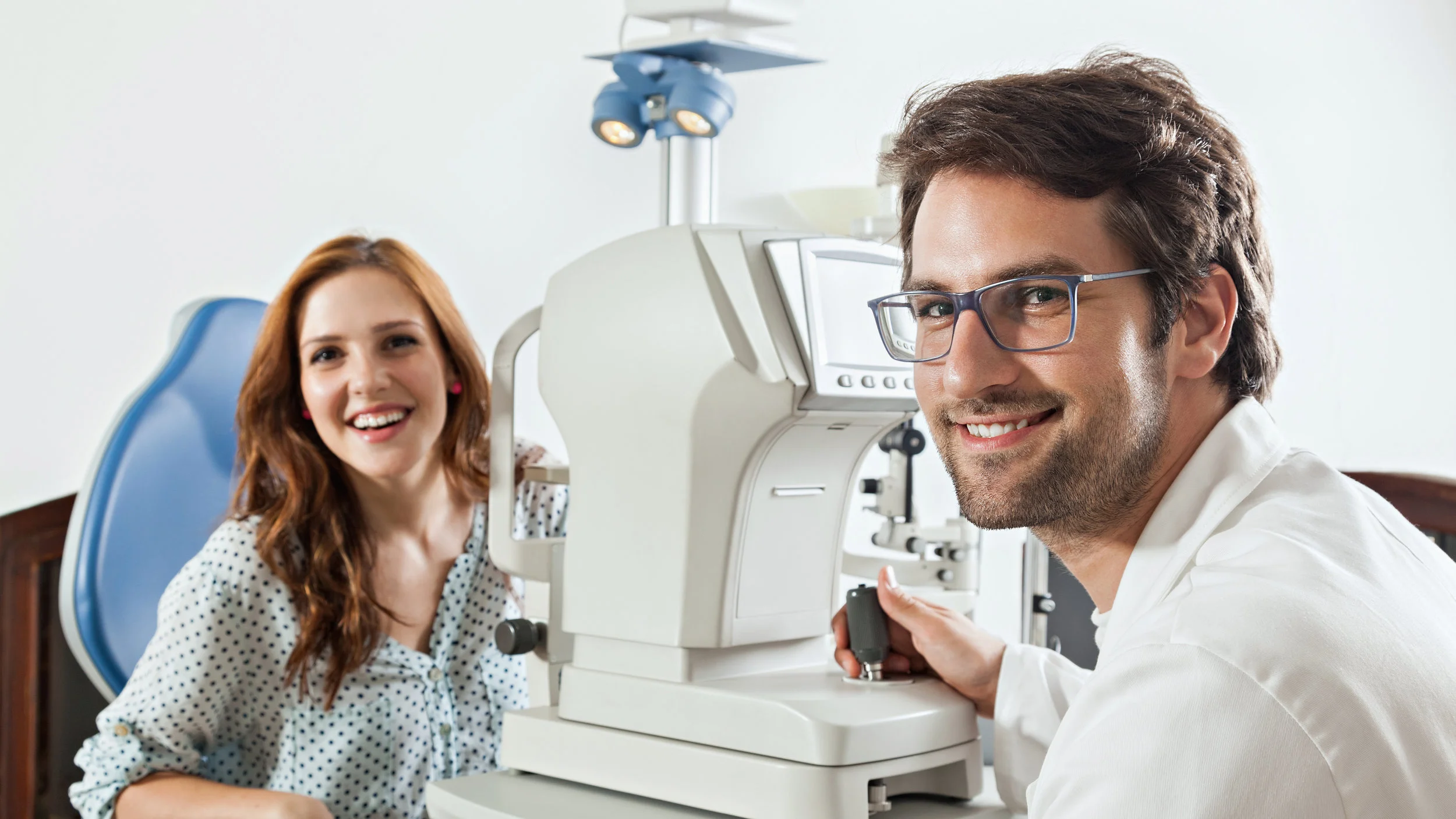
Why You Should Probably Marry an Optometrist (Part 1)
Have you ever wondered if there was a link between divorce rates and your profession? There are many personality and lifestyle issues to consider when choosing a lifelong companion. Though no one factor will doom your relationship, you may want to consider a nice Optometrist.
Have you ever wondered if there was a link between divorce rates and your profession? There are many personality and lifestyle issues to consider when choosing a lifelong companion. Though no one factor will doom your relationship, you may want to consider a nice Optometrist.
McCoy and Aamodt (2010) compiled the divorce rates for 449 occupations in the United States. They stated 16.96% reported that they “had been in a marital relationship, but were no longer with their spouse [separated or divorced]” (p. 3). This number is the average of each occupation’s average, which may account for the low number. The current employment status of the sample was not given.
The same study suggests that divorce rates were higher for occupations with higher numbers of African Americans and females, while rates were actually lower for occupations with higher numbers of Asian Americans and higher average incomes.
The top five highest divorce/separation rates by occupation were the following:
“Dancers and choreographers” at 43.05%,
“Bartenders” at 38.43%,
“Massage therapists” at 38.22%,
“Gaming cage workers” at 34.66%, and
“Extruding and forming machine setters, operators, and tenders, synthetic and glass fibers” at 32.74%.
The five lowest divorced/separated rates reported by occupation are as follows:
“Media and communication equipment workers, all other” at less than 1%,
“Agricultural engineers” at 1.78%,
“Optometrists” at 4.01%,
“Transit and railroad police” at 5.26%,
“Clergy” at 5.61%.
Are divorce rates worse for marriage therapists or counselors? There was not a specific occupation listed as Marriage and Family Therapist in the same study, however, there were multiple occupations in which a Marriage and Family Therapist may fall. McCoy and Aamodt listed the occupation “Therapists, all other” as having a divorce/separation rate of 24.20%, “Sociologists” as 23.53%, “Social workers” as 23.16%, “Counselors” as 22.49%, “Miscellaneous social scientists and workers” as 19.65%, and “Psychologists” as 19.30%. Each one of these categories had a divorce/separation rate well above the national average for all occupations of 16.96%.
The specific goal of that study was to further investigate the divorce rates of police officers as compared to other occupations. The researchers did not speculate as to why the divorce/separation rates of those in the field of psychotherapy might be so much higher.
To all my Marriage and Family Therapist colleagues, why do you think our divorce rate is not better when compared to other professions? Should we not all be marriage rockstars?
Part 2 is coming soon!
References
McCoy, S. P., & Aamodt, M. G. (2010). A comparison of law enforcement divorce rates with those of other occupations. Journal of Police and Criminal Psychology, 25, 1-16.

Marriage & Divorce: Family Therapists Share Their Own Stories
I have done a bit of research gathering stories of marriage and family therapists and their thoughts on marriage. As a marriage and family therapist who is married to another marriage and family therapist, I have a deeply personal interest in learning more about the marriages of therapists.
I have done a bit of research gathering stories of marriage and family therapists and their thoughts on marriage. As a marriage and family therapist who is married to another marriage and family therapist, I have a deeply personal interest in learning more about the marriages of therapists.
Framo (1968) wrote of his own experience of trying to keep boundaries between his clinical work, his family of origin, and his wife and children. He stated:
I don’t know when I first became aware of the phenomena that treating families not only revives the specters of one’s own past family life, but also has subtle, suffusing effects on the therapist’s current family relationships. After doing family therapy, and seeing what emotional systems can do to people, I take my own family life more seriously. In the living presence of a mother, father, brothers, and sisters, the constellation in which most of us grew, one finds oneself transported back to old thoughts, longings, disharmonies, and joys in a way which can be more moving and reintegrative than one’s own personal therapy or analysis. Each family we treat contains part of our own. As I saw more and more families I have become used to reliving each stage of my own family life cycle during sessions, in a series of flashbacks at once compelling and fearsome, fascinating and despairing, growth-promoting and regressive. While I am conducting treatment sessions, with my surface calm and important, hiding behind my degrees and the trappings of my profession, evaluating the dynamics of the family before me, figuring out the strategy, avoiding the traps, I communicate to the family only a small portion of the emotional connections I make with them the places where we touch. (p. 24-25)
Framo seemed to feel as if there was a link between his personal relationships and his psychotherapeutic practice.
Benningfield (2006) wrote an article about her own experiences in the process of divorce as a marriage and family therapist. She and her husband were both therapists, and worked in the same office. Benningfield mentioned one particular encounter with a client during this time. The client said, “Well, doc, if I couldn’t manage my own money, I wouldn’t expect my clients to give me theirs to manage. So how can you help us if you couldn’t make your marriage work?” (p. 31). It is a question that Benningfield struggled with for some time. Yet, she continued on in her work as a therapist and concluded the following:
One of the wonderful privileges of being a therapist is that our life experiences—whether aging, illness, birth, death, marriage or divorce— inform and transform our work with others. We learn from ourselves as well as from others. Perhaps one of the most valuable gifts we offer our clients is the opportunity to watch us be human, to struggle with as much as they do and sail in our own leaky boats on the same seas as they do, especially if in that process we also help them learn from themselves as well. (p. 31)
Clearly, Benningfield believed that therapists could still be of aid to others, despite their own imperfections. We could actually be even better when we allow our lives to continually inform our practices.
What to do you think? Please leave a comment below.
References
Benningfield, A. B. (2006). When therapists divorce. Family Therapy Magazine, 5(3), 31-33.
Framo, J. L. (1968). My families, my family. Voices: The Art and Science of Psychotherapy, 4, 18–27.

When Grief Comes Knocking During the Holidays
I recently had the opportunity to speak on the Living Well television show about how to cope with grief during the holidays. You can watch the video by clicking the picture at the end of this post. I wanted to share a bit more on of my thoughts this topic since I only had a few minutes during my interview.
I especially wanted to speak about this topic because I lost my mother to breast cancer in September and this has been our first holiday season without her. Christmas was one of her favorite times of the year and she loved spending extra time with our family.
I recently had the opportunity to speak on the Living Well television show about how to cope with grief during the holidays. You can watch the video by clicking the picture at the end of this post. I wanted to share a bit more on of my thoughts this topic since I only had a few minutes during my interview.
I especially wanted to speak about this topic because I lost my mother to breast cancer in September and this has been our first holiday season without her. She was only 54 years old. Christmas was one of her favorite times of the year and she loved spending extra time with our family.
Celebrate in Your Own Way
There is no right or wrong way to celebrate the holidays, especially after the loss of a loved one. Do not put extra pressure on yourself to decorate, cook a big meal, or plan a party unless you honestly want to do so. And if you do, try not to stress out about it being perfect.
Balance Alone & Social Times
It’s okay to be alone and okay to want support from others on that special day. Some people prefer to grieve in private, and I recommend that you trust your gut feeling on what is best for you. Others might prefer to share memories with family and friends, rather than being alone. If you choose to be alone, make sure to have a support system or friend you can call if your thoughts take a negative turn.
It is OKAY to Have Feelings
Give yourself permission to be sad or quiet. You do not have to force holiday cheer or wear a fake smile just to make other people more comfortable. That is not selfish. On the other hand, don’t feel guilty for being happy and celebrating if that is how you really feel.
Honor Your Loved One
There are many things we can do to honor the memory of those we have lost. You could donate money or time to charity, shovel a neighbor's snowy driveway, or bring a present to a child in need. Leaving new flowers or even Christmas caroling at the burial site can help you connect to those memories again.

It is important to remember children in this process. They do not always have the words to express how they feel and may suffer in silence. It is helpful to have age appropriate activities so they feel included. This year, my sister-in-law had a wonderful idea. Our kids made Christmas ornaments to honor "Nana's" memory. Each child had a clear bulb style ornament and then filled it with ribbons, sparkles, snowflakes, etc. to represent different feelings and special moments with with their grandmother. They all really enjoyed it and put them on our Christmas tree.
Focus on the Good Memories
I think the most important part to surviving a holiday after a death is to stay focused on the good memories and not on the loss. As awful as it was to lose my mother, I cannot imagine what my life would be like if I never had her in it. I will forever be grateful for the time we did share together.
What are some other ways you have coped with grief during holiday time?

Click to Watch Video - Holiday Grief

10 Signs That You Need a New Therapist
If you are in counseling now or consider seeking a therapist in the future, it is important to choose a counselor who is the right fit for you. I am always saddened to hear of an individual or couple giving up on counseling after one bad experience. Therapists are each unique in their specific approaches and you deserve one who is qualified to meet your needs. Here are a few signs that you may need a new therapist.
If you are in counseling now or consider seeking a therapist in the future, it is important to choose a counselor who is the right fit for you. I am always saddened to hear of an individual or couple giving up on counseling after one bad experience. Therapists are each unique in their specific approaches and you deserve one who is qualified to meet your needs. Here are a few signs that you may need a new therapist.
#1 Connection is Missing
It is well researched that the therapeutic alliance, or relationship, with the therapist and client is likely the single biggest predictor of success in therapy (Martin, Garske, & Davis, 2000). If you do not feel a connection or trust starting to build between you and your therapist, it might be time to consider a change.
#2 No Improvement
You see a therapist for several months and do not feel that any progress has been made. You might even feel worse after every session. Some issues take longer to solve or learn to manage than others, but if there is no hope for change…you might need a new therapist.
#3 Lack of Boundaries
Your counselor seems to forget that you are a client. They talk to you in depth about their own personal life or problems with no apparent therapeutic purpose. Maybe they seem a bit too interested in the details of your sex life. They want to be buddies outside of the therapy room while you are still a client. It sounds like they have boundary issues.
#4 Distractions
Your therapist seems to have trouble paying attention. They take calls or text during sessions. They seem to be thinking about something else. Maybe they even fall asleep. Not only is this rude, but you are paying them for a service. This is your time.
#5 Focus is on the Therapist
It is not a good sign if your counselor monopolizes your therapy hour by talking about him or herself. A certain amount of self-disclosure is probably therapeutic, but the therapist should not do the overwhelming majority of the talking. If you cannot seem to get a word in during your session, you need a new therapist.
#6 Never Neutral
Your therapist clearly always aligns with you or with your spouse on every issue. Yes, there are times when a therapist might agree with one person on a concern, but this should not be a constant taking of sides. It makes me think that the therapist has a personal issue that is appearing in the therapy office.
#7 Feeling Shamed and Judged
Feeling guilt because you are doing something or have done something that conflicts with your belief system might be a very appropriate response to a situation. A therapist can explore this without shaming a client and making him or her feel bad about who they are. If you feel constantly judged by your therapist, you need a new one.
#8 Violating Your Belief System
Every therapist has his or her own set of personal values. We cannot “not” have them. As counselors, we are not allowed to push our beliefs on others. This does not mean we cannot explore issues like spirituality, but simply that we cannot force our own values on you.
#9 Not Qualified or a Specialist
Some therapists claim to be able to treat a wide variety of issues. Many therapists truly are generalists, but I recommend that you seek a therapist that specializes in your presenting issue. They may have specialty certifications or degrees in that area. I have heard horrible stories about a therapist blaming a spouse for a client’s sexual addiction, and the therapist was simply not trained properly in addiction. This can be very damaging.
#10 Cancelling or Showing Up Late
This happens to all of us from time to time. If they are consistently late or cancelling often, it shows that they are not respectful of you or your time. Your counselor expects you to show up for appointments and they owe you the same courtesy.
In the end, you need to trust your gut. If you have a bad feeling about a therapist, I would find a new one. If you have a bad feeling about ten therapists, then something might be off with your gut feeling. Do you agree with these red flags? Please share below.
References
Martin, D. J., Garske, J. P., & Davis, M. K. (2000). Relation of the therapeutic alliance with outcome and other variables: a meta-analytic review. Journal of consulting and clinical psychology, 68(3), 438.