
Post Vacation Reflection: Coming Back Sunburned, Grateful, and Slightly Wobbly
There is something deeply humbling about returning from Spring Break vacation and realizing three things at once:
You are very glad you went.
You miss it already.
Your legs are not convinced you are back on land.
Stepping off the cruise ship, I genuinely wondered if I had forgotten how to walk. My body swayed like it was still negotiating waves, and for a brief moment I questioned whether balance—literal and metaphorical—was optional. It turns out, both take a minute to come back.
That felt like an appropriate metaphor for this season of life.
As I ease back into routines, inboxes, and the laundry that somehow multiplied while we were gone, one feeling keeps rising above the rest: gratitude.
It is a privilege to be healthy.
It is a privilege to have a healthy family.
It is a privilege to have the financial ability and flexibility to take a vacation at all.
And it is a privilege to be invited into community.
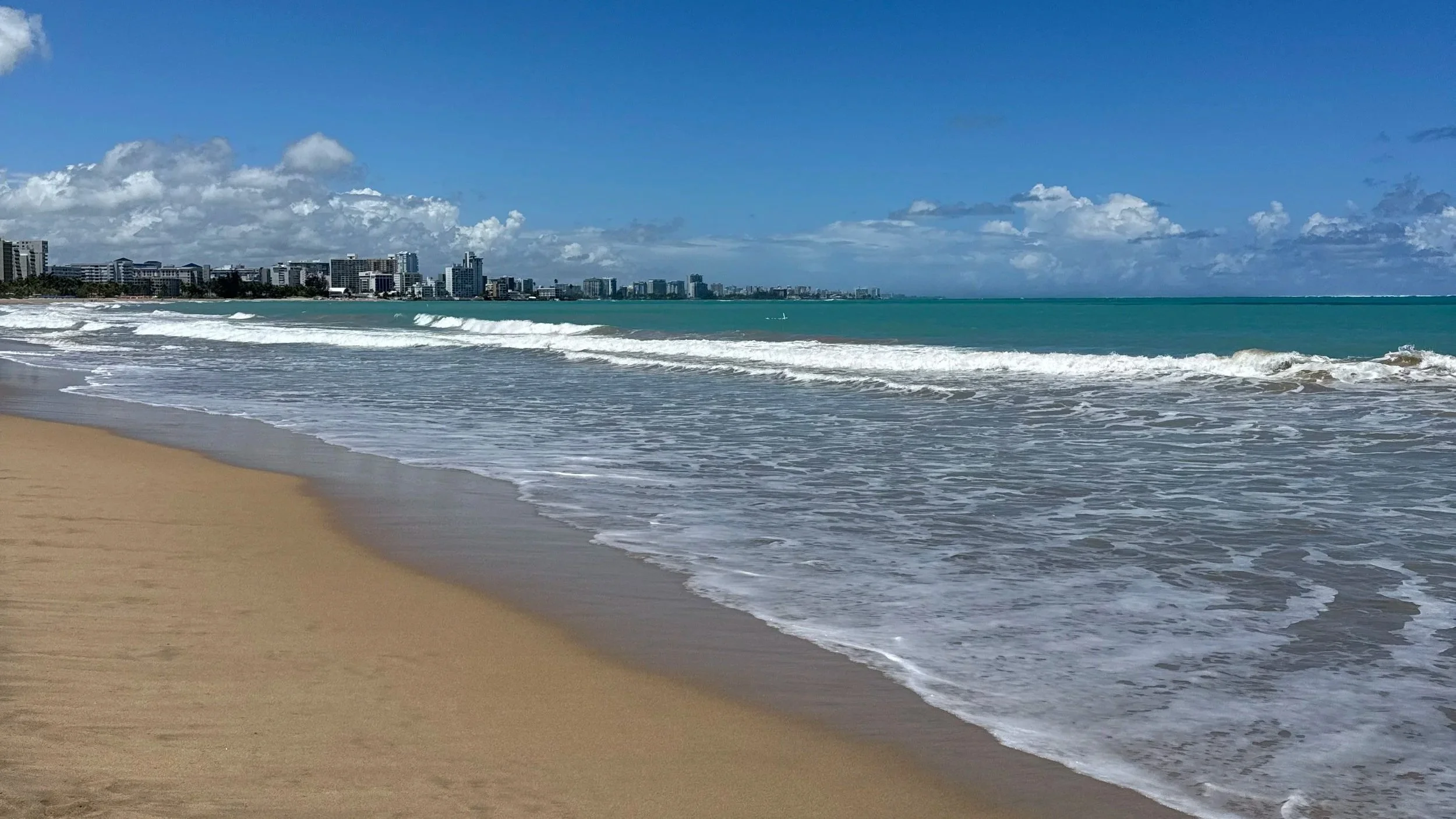
Grateful for the Invitation—and the People Who Made It Sweeter
This trip wasn’t something we did alone. We were invited by a generous group, and one of the unexpected gifts of the week was connecting not just with them, but with their extended family as well. Shared meals, easy conversations, laughter that didn’t require explanation—those moments mattered.
There is something grounding about being welcomed into spaces where connection feels natural and unforced. It reminded me that rest isn’t only about location; it’s about who you’re with. Community has a way of multiplying joy and making memories feel richer, and we are deeply thankful for the people who made this experience possible.
The Beach Photo That Says Everything
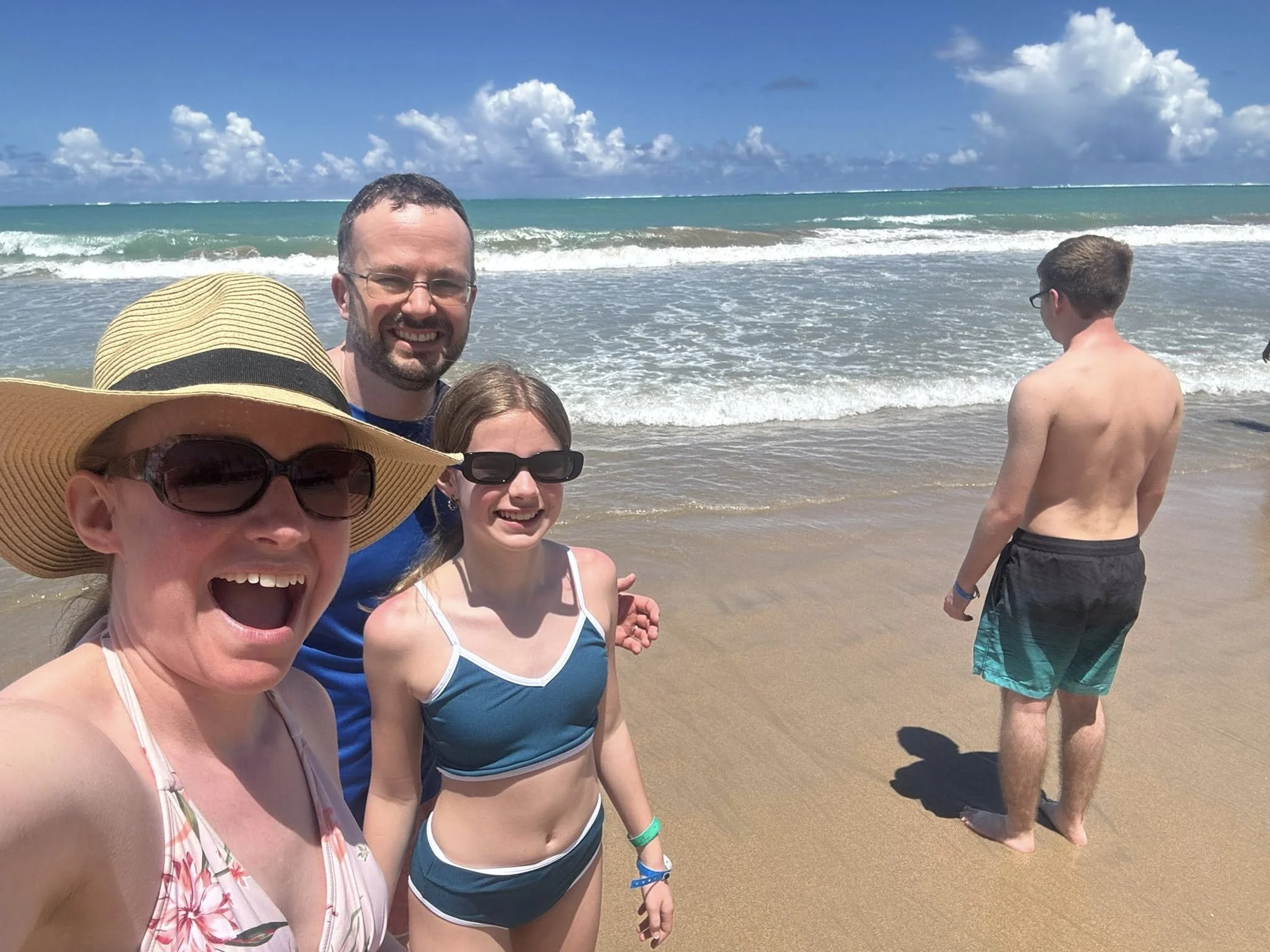
Like all good family vacations, there is the photo.
Our family beach photo includes my 14‑year‑old son, who made it very clear that participation was not his preference. He didn’t refuse outright—because he’s kind—but he did protest. Subtly. In the background. With his whole body.
So there we are: smiling, sun‑kissed, grateful… and behind us, a teenager silently communicating, I am here against my will.
Honestly? I love that picture. Because it’s honest. It captures the stage of life we’re in—where togetherness sometimes looks like compromise, eye‑rolling, and showing up anyway.
And that matters.
Holding Time Gently With My Daughter
One of the sweetest gifts of this trip was the time with my 11‑year‑old daughter. Unhurried conversations. Laughter. Shared moments that didn’t need multitasking.
If I’m being honest, I often work more than I should. I love my work. I believe deeply in it. But vacations have a way of gently reminding me that time is both precious and fleeting.
She is still at an age where she wants to be close, where presence matters more than productivity. That awareness sat tenderly with me this week—not with guilt, but with intention. Time together isn’t something to schedule later. It’s something to cherish now.
Naming the Burnout (Because It Was There)
This vacation came at a moment when I was burned out.
Not the dramatic, fall‑apart kind—but the quieter version that sneaks in when responsibility stacks up, when you’re holding space for others, making decisions, and carrying emotional weight for a long time without much pause. The kind where you’re still functioning, still caring, still showing up—but you’re tired in a way that sleep alone doesn’t fix.
Winter intensified that for me. Short days. Full calendars. A nervous system that had been “on” for longer than I realized.
I didn’t fully notice how depleted I was until we slowed down.
Vacation didn’t erase the burnout—but it interrupted it. It gave my nervous system a chance to settle. It reminded me what it feels like to wake up without urgency, to laugh without multitasking, to be present without planning the next thing.
From a psychoeducation standpoint, this matters: burnout recovery is less about escaping responsibility and more about helping the body complete stress responses and return to a felt sense of safety.
Gentle Burnout Recovery Reminders (Inspired by Emily Nagoski)
One framework I often return to—personally and professionally—comes from Emily Nagoski’s work on burnout. A few gentle reminders that stood out to me on this trip:
Burnout isn’t a personal failure. It’s what happens when stress accumulates faster than our bodies can process it. You’re not broken—you’re overloaded.
Rest alone doesn’t complete the stress cycle. Sleep is important, but our bodies often need movement, connection, laughter, or emotional expression to truly reset.
Physical movement helps the body feel “done.” Even gentle walking, stretching, or dancing can signal to the nervous system that the stressor has passed.
Connection is regulation. Safe relationships—shared meals, hugs, laughter, meaningful conversation—help the body return to calm far more effectively than isolation.
Burnout recovery happens in small, repeated moments. Not one vacation. Not one weekend. But consistent permission to rest, connect, and slow down over time.
Burnout narrows our world. These practices slowly widen it again.
The Ups, the Downs, and the Reset We Needed
Yes, there were beautiful moments—sunshine, slow mornings, meals without rushing, laughter that felt lighter than it has in months. There were also tired moments, overstimulation, minor meltdowns, and at least one “Why did we think this would be restful?” realization.
Vacation doesn’t remove real life. It just gives it a different backdrop.
But after a long winter—emotionally, mentally, and seasonally—this reset mattered. Winter has a way of tightening us up. By the time spring arrives, many of us don’t realize how much we’ve been bracing until we finally stop.
This trip gave us space to breathe again.
Health, Provision, and the Gift of Possibility
One quiet but powerful truth stayed with me: none of this is guaranteed.
Health is not guaranteed.
Time is not guaranteed.
Opportunities to rest, travel, and reconnect are not guaranteed.
Being able to walk off a ship (eventually), spend time with people we love, meet new family friends, laugh together, and simply be—that is a gift.
Gratitude doesn’t deny hardship. It deepens appreciation for what is present.
Coming Home Re‑Grounded (and Mostly Steady)
I didn’t come home magically transformed or suddenly immune to stress. But I did come home more grounded. More aware of what matters. More committed to protecting time with my family—and to remembering that balance, like sea legs, takes intentional recalibration.
And yes, I’m still finding my footing.
If this season finds you tired, longing for rest, or unsure how to regain balance, let this be your reminder: renewal doesn’t have to be dramatic. Sometimes it starts with stepping away. Sometimes it starts with gratitude. Sometimes it starts with noticing the beauty—even when someone is protesting in the background.
I’m grateful we went.
I’m grateful for the people who invited us and welcomed us.
I’m grateful we came back.
And I’m grateful for the reminder of what truly steadies us.
Resources
Nagoski, E., & Nagoski, A. (2019). Burnout: The Secret to Unlocking the Stress Cycle. Ballantine Books.
Nagoski, E. & Nagoski, A. Burnout Project & resources: https://www.burnoutbook.net/
CPTSD Foundation. Completing the Stress Cycle (overview of Nagoski’s framework)