
Finding the Sweet Spot: How to Stay Connected Without Losing Yourself
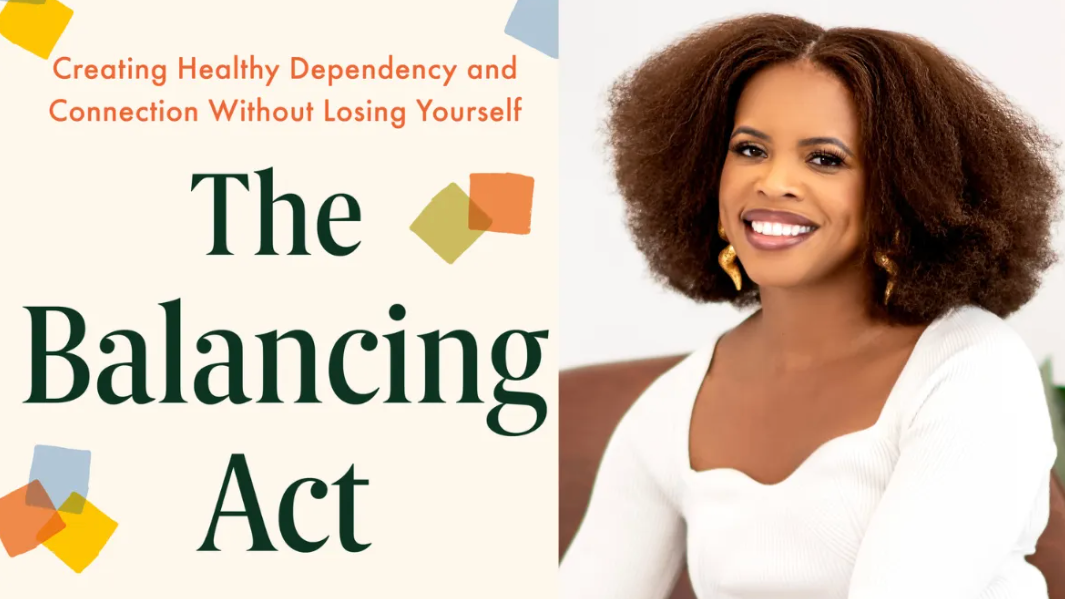
In her newest book, The Balancing Act: Creating Healthy Dependency and Connection Without Losing Yourself, licensed therapist and bestselling author Nedra Glover Tawwab explores a question many people quietly wrestle with: How do we stay connected to others without losing ourselves in the process?
Building on her previous work on boundaries and family dynamics, Tawwab reframes dependency as something that isn’t inherently unhealthy—but rather something that exists on a spectrum. When balanced well, healthy dependency (often referred to as interdependence) can support connection, authenticity, and emotional well‑being.
Part One: Understanding the Dependency Spectrum
In the first section of the book, Tawwab introduces the dependency spectrum, ranging from hyper‑independence on one end to hyper‑dependence on the other. She helps readers identify where they tend to land and how early experiences, trauma, attachment patterns, and fear of rejection or abandonment can shape how they relate to others.
Hyper‑independence often shows up as “I don’t need anyone,” while hyper‑dependence may look like over‑giving, losing boundaries, or abandoning one’s own needs to maintain connection. Tawwab emphasizes that both extremes can lead to loneliness, disconnection, and emotional exhaustion.
Part Two: Moving Toward Healthier Connection
In the second half of the book, Tawwab outlines a path toward healing and balance, offering tools for those who struggle with either extreme. She helps readers learn how to distinguish between faux connection—relationships that are maintained out of fear, obligation, or distraction—and deep, meaningful connection, which allows space for authenticity, boundaries, and mutual care.
Tawwab also highlights forms of dependency that can quietly keep people stuck, including:
Overreliance on social media and technology
Dependency on substances
Unbalanced relationship patterns within one’s social life
Rather than encouraging all‑or‑nothing thinking, she invites readers to examine how and why they depend on certain people or behaviors—and whether those patterns support or erode their well‑being.
Practical Applications for Everyday Life
One of the book’s strengths is its practical, real‑world focus. Readers are encouraged to:
Practice asking for help in clear, direct ways
Build a diversified support system instead of relying on one person for all emotional needs
Allow room for discomfort and repair in relationships, recognizing that friction can be part of healthy growth
Balance time alone with time together—learning to be both independent and connected
Reframe boundaries as pathways to closeness rather than barriers to intimacy
These tools can be especially helpful for individuals recovering from codependent patterns, trauma, or emotionally unbalanced relationships.
Why This Book Matters
At its core, The Balancing Act reminds readers that relationships are about human engagement, not perfection or self‑sufficiency. We thrive when we allow ourselves to lean on others while also maintaining autonomy. Working toward healthier dependency can support mental, physical, and social well‑being—offering opportunities for protection, restoration, and more harmonious connections.
For individuals seeking to deepen relationships without losing themselves—and for those healing from extremes of independence or dependence—this book offers a compassionate, grounded guide forward.
References
Tawwab, N. G. (2026). The Balancing Act: Creating Healthy Dependency and Connection Without Losing Yourself. Tarcher / Penguin Random House. [amazon.com]
Tawwab, N. G. (2026). The Balancing Act – Official Book Description. Nedra Tawwab. https://www.nedratawwab.com/books/the-balancing-act [nedratawwab.com]
Johnson, R. (2026). “The Balancing Act” (Healthy Dependency): Nedra Glover Tawwab. Minding Therapy. https://www.mindingtherapy.com/balancing-act-nedra-glover-tawwab/ [mindingtherapy.com]
Lindsay, S. (2026). Nedra Glover Tawwab Says This Is How to Create Healthy Relationships. The Sunday Paper. https://www.mariashriversundaypaper.com/nedra-glover-tawwab-create-healthy-relationships/ [mariashriv...ypaper.com]