
After Josh and Joseph Duggar: How High‑Control Religious Environments Can Enable Child Sexual Abuse
Trigger Warning:
This article discusses child sexual abuse, institutional betrayal, and abuse within religious contexts. While no graphic details are included, the subject matter may be emotionally activating for survivors of abuse, religious trauma, or spiritual abuse. Readers are encouraged to proceed at their own pace, take breaks as needed, and seek support if distress arises.
If you or someone you know has experienced sexual abuse, confidential support is available through RAINN (800‑656‑HOPE) or local crisis resources.
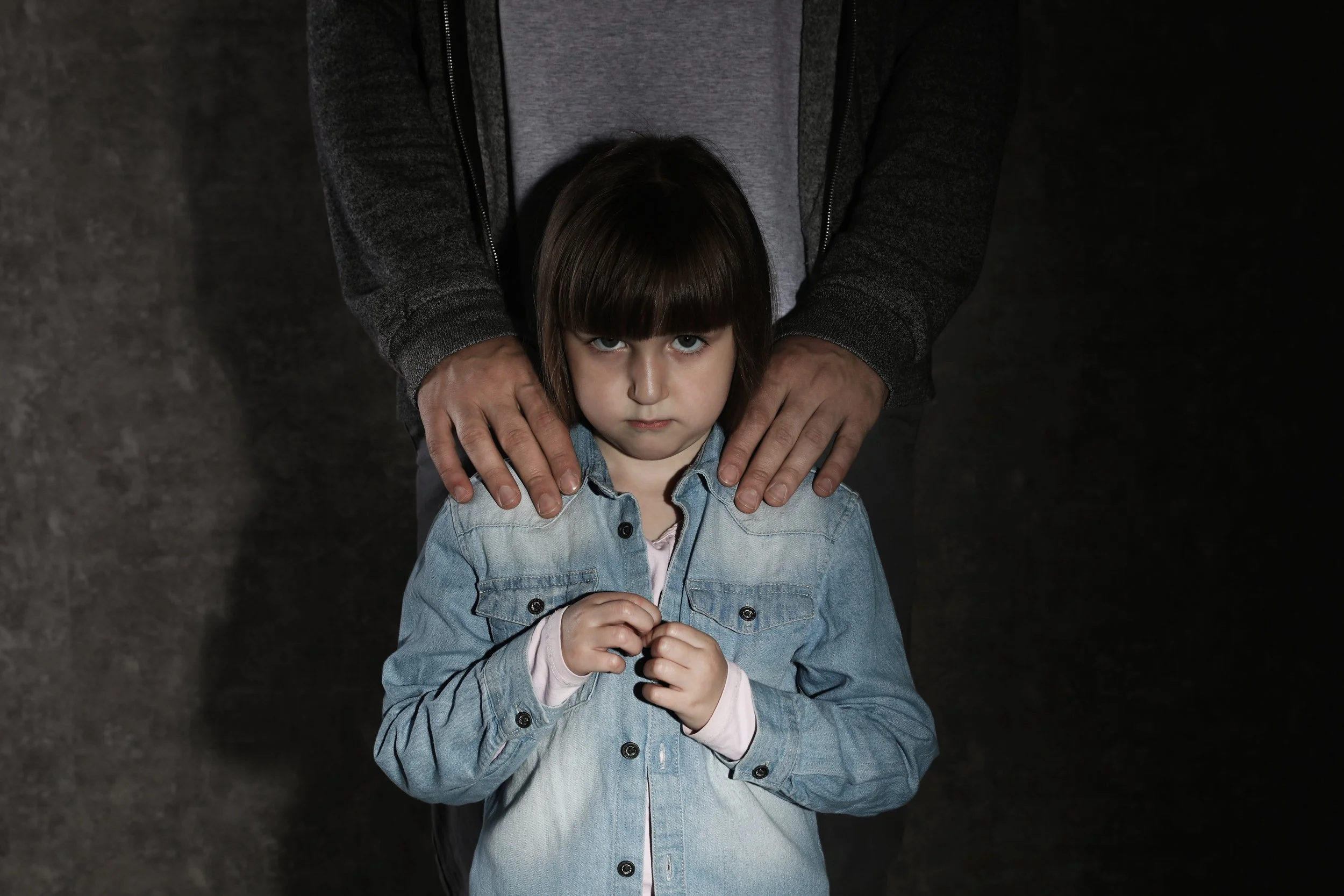
In recent years, the public has been forced to confront deeply troubling stories involving child sexual abuse within highly visible religious families. The most well‑known is Josh Duggar, a former reality television figure who was convicted in federal court for receiving and possessing child sexual abuse material and sentenced to more than twelve years in prison. Years earlier, multiple women—including several of his sisters—had disclosed that Josh Duggar sexually abused them during adolescence, disclosures that were handled internally within the family’s religious community rather than reported to civil authorities at the time.
More recently, public attention has again turned to the Duggar family following the arrest of Joseph Duggar, Josh Duggar’s younger brother, who has been charged with child sexual abuse offenses related to alleged conduct involving a minor during a family vacation in Florida. According to law‑enforcement statements, the allegations surfaced years after the reported incident following a forensic interview and investigation. At the time of writing, these charges remain allegations and have not yet been adjudicated in court.
The presence of multiple abuse cases within the same highly controlled religious and familial system raises necessary and uncomfortable questions—not only about individual perpetrators, but about the environments in which abuse can be minimized, concealed, or reframed as a moral or spiritual issue rather than treated as a criminal act.
This article is not an attack on religion or religious belief. Many faith communities are deeply protective of children and actively engaged in safeguarding, justice, and healing. However, decades of interdisciplinary research demonstrate that high‑control religious environments—across traditions—can unintentionally create conditions that increase vulnerability to abuse and suppress disclosure when abuse occurs.
Why Repeated Cases Matter Clinically and Sociologically
From a trauma‑informed perspective, patterns matter more than individual scandals. When abuse appears repeatedly within the same family system, community, or belief structure, clinicians and researchers are compelled to examine systemic risk factors, not merely individual pathology.
Large‑scale inquiries into religious institutions across multiple countries have consistently identified dynamics that increase risk, including rigid hierarchies, unquestioned authority, internal handling of abuse allegations, and cultural pressure to protect institutional reputation over child safety. These systems often discourage reporting to secular authorities and frame disclosure as sinful, divisive, or damaging to the faith community.
Authority, Obedience, and Grooming in Religious Contexts
Research by Raine and Kent demonstrates that religious environments can contain unique grooming mechanisms that differ from secular contexts. These include spiritualized authority, reverence for leaders, fear‑based beliefs about punishment or divine consequences, and theological rationalizations that can be exploited to silence children and caregivers alike.
Importantly, this research does not argue that religion causes abuse. Rather, it highlights how unchecked power within obedience‑based systems can be misused when transparency and accountability are absent.
Institutional Betrayal and the Cost of Silence
When children disclose abuse and are met with minimization, secrecy, or spiritual reframing instead of protection, the harm deepens. Psychological literature refers to this phenomenon as institutional betrayal—a secondary trauma that occurs when an institution fails to protect those who depend on it.
Institutional betrayal is associated with increased PTSD symptoms, shame, dissociation, and long‑term difficulty trusting authority figures. Survivors frequently report that the response of the institution—family, church, or community—was as damaging as the abuse itself.
It bears repeating:
Religion does not cause child sexual abuse. Abusers do.
At the same time, religious communities can either increase risk or increase protection. Research shows that faith communities become safer when they embrace mandatory reporting, shared leadership, survivor‑centered theology, and external accountability. Many survivors ultimately reclaim spirituality in healthier, less rigid forms when their experiences are believed and validated.
How Friends and Family Can Support Survivors of Sexual Abuse
For many survivors, the most significant factor in long‑term healing is not the severity of the abuse, but how people responded when they disclosed. Supportive responses are protective; harmful responses compound trauma.
Friends and family do not need perfect words or clinical training. What matters most is belief, presence, and respect for the survivor’s autonomy.
1. Believe Them—Without Qualification
The most powerful response is often the simplest: “I believe you.”
Avoid questioning details, playing devil’s advocate, or seeking certainty. Survivors frequently delay disclosure for years due to fear of disbelief or retaliation.
2. Let the Survivor Set the Pace
Avoid rushing to problem‑solve, confront the perpetrator, or push for legal action. Control was already taken from the survivor once. Healing requires that it be returned.
Support means respecting their timeline—even when it is difficult to understand.
3. Avoid Spiritualizing or Minimizing the Harm
Statements such as “God has a plan,” “Everything happens for a reason,” or “You need to forgive” often increase shame and silence. These responses may unintentionally communicate that the survivor’s pain is inconvenient or spiritually inadequate.
Healing is not accelerated by forced meaning‑making.
4. Listen More Than You Speak
You do not need to fix the pain. Survivors benefit most when loved ones listen without interruption, reflect what they hear, and tolerate their own discomfort without redirecting the conversation.
5. Respect Boundaries—Even When They’re Hard
Survivors may limit contact with family members, leave religious spaces, or change long‑standing relationships. These boundaries are not punishments; they are adaptive survival strategies.
6. Encourage Support—Without Pressure
Professional help can be life‑saving, but it should be offered as an option, not a mandate. Practical support—help finding resources, childcare, or transportation—often matters more than advice.
7. Care for Yourself, Too
Supporting a survivor can stir grief, anger, or helplessness. Seeking your own support is not a betrayal—it strengthens your capacity to show up consistently and without resentment.
Moving Forward: What Protects Children
Research consistently identifies protective factors:
Mandatory reporting without religious exemption
Shared leadership and external accountability
Trauma‑informed training for clergy and volunteers
Clear safeguarding policies
Theologies that prioritize human dignity over institutional preservation
When faith communities choose courage over silence, they can become places of genuine safety.
If you our your organization would like information or support around how to respond to child sexual abuse, please reach out to our office.
A Final Word
As a therapist, I sit with adults who were once children silenced by fear, loyalty, or faith‑based shame. Many are not angry at God—they are grieving the protection they were promised and did not receive.
We can honor faith and protect children.
We can respect religion and demand accountability.
And we can listen to survivors without defensiveness.
That is not an attack on religion.
It is an act of moral responsibility.
Reference List
Freyd, J. J. (2018). Institutional betrayal and institutional courage. Journal of Trauma & Dissociation, 19(1), 1–6.
Independent Inquiry into Child Sexual Abuse. (2019). Child sexual abuse in the context of religious institutions. https://www.iicsa.org.uk
Lucia, A. (2025). The Religion & Sexual Abuse Project: An introduction. Religion, 55(4), 761–782. https://doi.org/10.1080/0048721X.2025.2538952
Perry, S. (2024). Religious/spiritual abuse, meaning‑making, and posttraumatic growth. Religions, 15(7), 824. https://doi.org/10.3390/rel15070824
Raine, S., & Kent, S. A. (2019). The grooming of children for sexual abuse in religious settings: Unique characteristics and select case studies. Aggression and Violent Behavior, 48, 180–189. https://doi.org/10.1016/j.avb.2019.08.017
Royal Commission into Institutional Responses to Child Sexual Abuse. (2017). Religious institutions. https://www.childabuseroyalcommission.gov.au
Smith, C. P., & Freyd, J. J. (2014). Institutional betrayal. American Psychologist, 69(6), 575–587. https://doi.org/10.1037/a0037564