

“If They Wanted To, They Would” vs. Grace: Navigating Two Conflicting Beliefs in Relationships
In recent years, one phrase has taken center stage in conversations about relationships: “If they wanted to, they would.”
At face value, it sounds empowering. It validates hurt, calls out inconsistency, and pushes back against chronic disappointment. For many people—especially those who have overextended themselves in relationships—it feels like permission to stop making excuses for others.
In recent years, one phrase has taken center stage in conversations about relationships: “If they wanted to, they would.”
At face value, it sounds empowering. It validates hurt, calls out inconsistency, and pushes back against chronic disappointment. For many people—especially those who have overextended themselves in relationships—it feels like permission to stop making excuses for others.
And yet, sitting quietly on the other side of this belief is another value many of us also hold dear: grace. Grace that says people are imperfect, overwhelmed, neurodivergent, traumatized, distracted, learning, growing. Grace that invites us to hold lower expectations and offer compassion rather than constant judgment.
So which is it?
Should we expect more from the people we love—or less?
Should we interpret behavior as a clear reflection of desire—or allow room for human limitation?
The tension between these two beliefs is one I see every day in therapy rooms. And the truth is: both can be true—and both can be harmful—depending on how rigidly we hold them.

The Appeal (and Danger) of “If They Wanted To, They Would”
This belief didn’t emerge out of nowhere. For many people, it was born out of real pain.
Being the only one who initiates
Repeated broken promises
Emotional labor going unnoticed
Feeling like an afterthought
In those contexts, “if they wanted to, they would” can be a reality check. It helps people stop rationalizing neglect or minimizing patterns of disregard. It reminds us that behavior matters, not just words or intentions.
From a therapeutic standpoint, this belief can be especially important for people healing from:
Codependency
Trauma bonds
Relationships marked by emotional unavailability or inconsistency
In these cases, the phrase helps shift focus away from why someone isn’t showing up and back toward what is actually happening.
But here’s where it can quietly become problematic.
When taken as an absolute truth, “if they wanted to, they would” assumes:
Desire always translates into action
Capacity is equal across people
Effort looks the same for everyone
And that simply isn’t how humans work.
The Other Extreme: Low Expectations and Endless Grace
On the opposite end of the spectrum is a belief many of us were taught—explicitly or implicitly—to value: grace.
Grace sounds like:
“They’re doing the best they can.”
“They didn’t mean it.”
“I know they care, they just struggle.”
“I don’t want to be too demanding.”
Grace is essential for healthy relationships. It allows for repair, growth, and forgiveness. It acknowledges nervous system differences, mental health challenges, stress, trauma histories, and seasons of life where capacity is genuinely limited.
But grace, when untethered from boundaries, can slowly turn into self-abandonment.
I often see clients who pride themselves on being “understanding” but feel chronically lonely, unseen, or resentful. They’ve lowered expectations so far that there’s very little left to hope for—yet they’re still hurt when nothing changes.
Grace becomes harmful when it:
Explains away repeated patterns
Replaces honest conversations
Prevents accountability
Keeps someone in a one-sided dynamic
Grace is not meant to erase your needs.
Intention, Impact, and Capacity Are Not the Same Thing
One of the most important distinctions we can make in relationships is between intention, impact, and capacity.
Someone may want to show up—and still struggle to do so consistently.
Someone may care deeply—and still cause harm.
Someone may lack skills or regulation—not desire.
This doesn’t mean their behavior doesn’t matter. It does.
But it does mean that desire alone is not the full story.
At the same time, understanding someone’s limitations does not obligate you to tolerate unmet needs indefinitely.
You are allowed to ask:
Is this a temporary limitation—or a long-term pattern?
Am I being patient—or am I waiting for potential?
Do my needs require change, or acceptance?
These are not selfish questions. They are relationally honest ones.
A More Nuanced Truth
Instead of choosing between “if they wanted to, they would”or grace, I often invite clients to consider a more balanced framework:
People show us what they are able and willing to do—within the limits of who they are right now.
Your job is not to diagnose why.
Your job is to decide whether that reality works for you.
Healthy relationships require both compassion and standards.
Grace without expectations leads to resentment.
Expectations without grace lead to rigidity and disconnection.
The goal is not perfection—it’s mutual effort, responsiveness, and repair.
A Personal Note
I want to share a brief personal moment, because this tension isn’t something I’ve only studied clinically—it’s something I’ve wrestled with myself.
I once asked my own therapist a very similar question:
How do I know the difference between these two concepts? Is it one or the other?
Without missing a beat, she said,
“It’s both and.”
I immediately swore at her. Ha.
Then we both laughed.
Because of course she was right. And because adulting—especially relational adulting—is hard.
We often want clean answers in relationships. A rule we can apply. A phrase that tells us when to stay and when to go. But most of the meaningful work happens in the uncomfortable middle, where two truths exist at the same time: people are limited and our needs matter; grace is necessary and patterns are real.
The work isn’t choosing the “right” belief.
The work is tolerating the complexity.
What This Looks Like in Practice
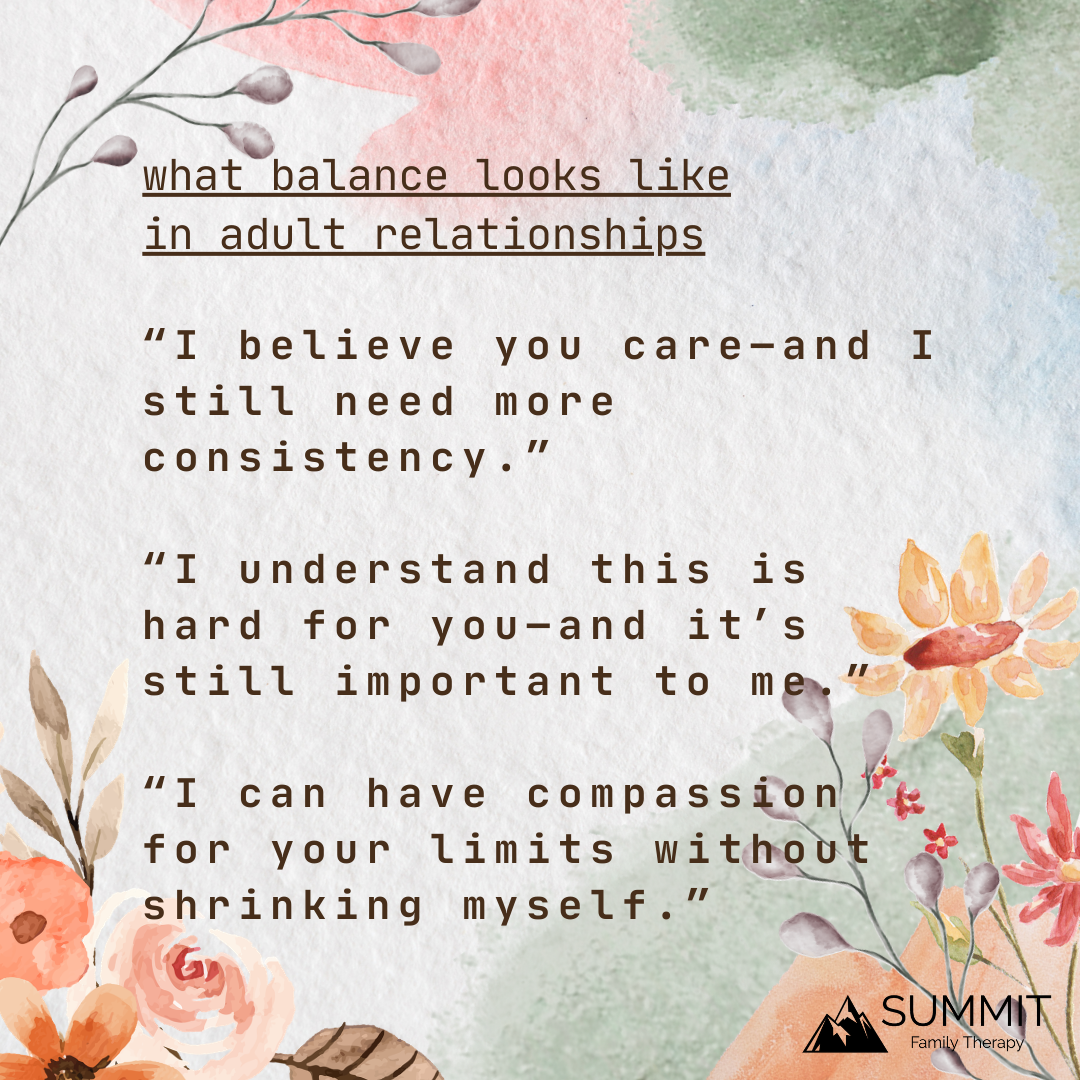
A balanced approach sounds like:
“I believe you care—and I still need more consistency.”
“I understand this is hard for you—and it’s still important to me.”
“I can have compassion for your limits without shrinking myself.”
It also means recognizing when something is a mismatch, not a moral failure.
Not every unmet need means someone is unwilling.
Not every explanation means you should stay.
Final Thoughts
Relationships are complex because people are complex.
When we cling too tightly to “if they wanted to, they would,” we risk oversimplifying human behavior and losing empathy.
When we lean too heavily on grace, we risk losing ourselves.
The healthiest relationships live in the tension—where honesty and compassion coexist, where needs are named, and where effort flows in both directions.
You are allowed to expect care.
You are allowed to offer grace.
And you are allowed to walk away when both cannot exist together.
When Attraction Hijacks Your Dopamine: People as Hyperfixations
Hyperfixation is a fairly common experience for those of us with ADHD, and it can also show up for people with autism—especially when ADHD and autism overlap. It usually starts innocently enough. We find something new and interesting, our brain releases dopamine, and suddenly that thing feels exciting, energizing, and alive.
Hyperfixation is a fairly common experience for those of us with ADHD, and it can also show up for people with autism—especially when ADHD and autism overlap. It usually starts innocently enough. We find something new and interesting, our brain releases dopamine, and suddenly that thing feels exciting, energizing, and alive.
We want more of it.
Hyperfixation can be genuinely joyful. It can spark creativity, produce a flow state, and give a sense of purpose or momentum. The challenge with ADHD is that the brain doesn’t always know when to stop. A little feels good, so more feels better, and eventually as much as possible feels necessary. That’s part of what makes ADHD brains more vulnerable to addiction and compulsive behaviors.
But what happens when the object of the hyperfixation isn’t a hobby, topic, or substance—but another human being?
That’s where things can get especially complicated.

When the Hyperfixation Is a Person
Hyperfixation on a person can be:
Platonic
Romantic
Sexual
Or some confusing combination of all three
The intensity alone can make it incredibly difficult to tell the difference—especially when the person is someone you could plausibly be attracted to romantically or sexually. How this plays out depends on the other person’s feelings, the boundaries involved, and the impact on your existing relationships.
There are a few common patterns I see.
Scenario One: Limerence and the Unknown
One of the most common scenarios today is limerence, where the other person’s feelings are unknown or not reciprocated. Modern life makes this easier than ever—we can develop intense attraction to people who don’t actually know us, whether that’s someone online, a public figure, or someone we only interact with superficially.
This kind of hyperfixation can quietly devastate mental health.
When feelings are uncertain or unreturned, the brain stays hooked on possibility. That uncertainty fuels obsessive thinking, emotional highs and lows, and intense rejection sensitive dysphoria—a crushing sense of rejection that can spiral into despair or depression.
As long as the outcome is unclear, the cycle can continue:
Obsessive interest
Emotional hope
Perceived rejection
Emotional collapse
Repeat
If left unchecked, this can lead to unhealthy time and money investment in parasocial relationships—or, in extreme cases, boundary violations like stalking. When addressed early, though, people can grieve the fantasy, regulate the dopamine loop, and move toward healthier forms of connection.
Scenario Two: Mutual Attraction, Uneven Intensity
Another scenario occurs when attraction is mutual—but the hyperfixation is one‑sided.
This can look a lot like love‑bombing from the outside:
Excessive gift‑giving
Wanting to spend every possible moment together
Intense distress when apart
Over‑prioritizing the other person
The key difference from abusive love‑bombing is intent. There’s no manipulation or hidden agenda—just an unsustainable level of focus driven by dopamine. The person hyperfixating often neglects their own needs, routines, and relationships in the process.
If noticed early, this can settle into a healthy relationship. If not, it often ends with a painful emotional crash once the hyperfixation fades.
Scenario Three: Mutual Hyperfixation
Sometimes, both people hyperfixate on each other.
This can feel intoxicating. There’s often rapid bonding, deep conversations, oversharing, and a sense of “I’ve never connected like this before.” The connection feels deep—but it isn’t very wide. When the dopamine drops, the relationship can feel suddenly fragile or disorienting.
With intention, pacing, and boundaries, mutual hyperfixation can evolve into a deep friendship or romantic partnership. Without those things, it can burn bright and collapse just as fast.
When You’re Already in Another Relationship
Things get even more complicated when someone develops a hyperfixation while already in a romantic relationship or close friendship.
This is especially likely when the existing relationship isn’t meeting certain needs. A new person appears, the connection feels effortless, dopamine spikes, and suddenly unmet needs—or unresolved emotional wounds—start getting attention.
Energy and focus slowly shift. Other relationships begin to suffer. And while hyperfixation eventually fades, the damage left behind may not.
How to Tell If You’re Hyperfixating on a Person
You might be hyperfixating if:
Your emotional state revolves around communication with one specific person
You constantly worry about how they see you
You neglect responsibilities or other relationships
You’re overly attached to your phone waiting for messages
You ignore your own needs because of the focus on them
Awareness is the first—and most important—step.
What Helps
Set boundaries with yourself. Decide how much time and emotional energy you want this relationship to have. Identify lines you don’t want to cross—topics, behaviors, or situations that blur boundaries.
Redirect energy intentionally. Re‑invest in hobbies, self‑care, and existing relationships. Dopamine needs somewhere to go.
Practice grounding and mindfulness. Watch for spirals of self‑criticism or obsession. Respond with curiosity and compassion rather than shame.
Regulate before reacting. Strong emotions don’t mean you need to act on them immediately.
And if the hyperfixation feels unmanageable or is causing real harm, reach out to a therapist. This is especially important if rejection sensitivity, depression, or anxiety are intensifying.
Final Thoughts
Hyperfixation isn’t a character flaw. It’s a brain doing what it does best—seeking stimulation, connection, and meaning. The goal isn’t to eliminate that capacity, but to work with it instead of letting it run the show.
Attraction doesn’t have to hijack your nervous system—but it does require awareness, boundaries, and self‑compassion.

Codependency vs. Healthy Dependency: Understanding the Difference
In recent years, the term codependency has made its way into everyday language. It’s often used casually to describe “needy” behavior or intense attachment, but clinically, codependency is a complex relational pattern rooted in early experiences, trauma, and fears of abandonment. At the same time, humans are wired for healthy dependency — the mutual reliance that strengthens secure relationships.
In recent years, the term codependency has made its way into everyday language. It’s often used casually to describe “needy” behavior or intense attachment, but clinically, codependency is a complex relational pattern rooted in early experiences, trauma, and fears of abandonment. At the same time, humans are wired for healthy dependency — the mutual reliance that strengthens secure relationships.
One of the most important tasks in therapy is helping people distinguish between these two experiences. Understanding the difference is essential for building relationships that feel supportive, balanced, and emotionally safe.
What Is Codependency?
Codependency is commonly defined as a relational pattern in which one person becomes excessively emotionally or psychologically reliant on another—typically to the point of sacrificing their own needs, boundaries, or identity (Beattie, 1987; Cermak, 1986).
Key characteristics of codependency often include:
Difficulty saying no
Feeling responsible for others’ emotions or choices
Fear of abandonment or rejection
Self-worth tied to being needed
People‑pleasing to avoid conflict
Difficulty expressing personal needs
A pattern of choosing partners who are emotionally unavailable, unpredictable, or struggling with addiction
Cermak (1986) describes codependency as a “chronic pattern of dysfunctional caring,” where caretaking becomes compulsive and self-neglect becomes normalized.
In trauma‑informed terms:
Codependency often develops when early relationships required a child to be hyper-attuned to caregivers’ emotional states. In adulthood, this can transform into relationships driven by anxiety, over-functioning, or emotional enmeshment.
What Is Healthy Dependency?
Healthy dependency—also known as interdependence or secure dependence—is a natural, necessary part of human relationships.
Attachment science shows that humans are biologically wired for closeness, comfort, and co-regulation (Bowlby, 1988; Johnson, 2004). Healthy dependency is not weakness; it’s a sign of relational security.
Healthy dependency includes:
Mutual support and shared emotional labor
Freedom to express needs without fear
Balanced give-and-take
Maintaining individuality while staying connected
Respect for personal boundaries
Trust that the relationship can withstand honesty and conflict
Dr. Sue Johnson (2004), creator of Emotionally Focused Therapy, emphasizes that emotionally healthy adults “depend on each other without losing themselves.”
Codependency vs. Healthy Dependency: The Core Differences
1. Identity
Codependency: Sense of self becomes defined by caregiving, approval, or “being needed.”
Healthy Dependency: Both people maintain autonomy while staying emotionally connected.
2. Boundaries
Codependency: Blurred boundaries, difficulty saying no, fear that needs will push others away.
Healthy Dependency: Clear boundaries, comfort expressing limits and preferences.
3. Emotional Responsibility
Codependency: Feeling responsible for managing another person’s mood, choices, or reactions.
Healthy Dependency: Supportive but grounded—each person is responsible for their own emotional regulation.
4. Reciprocity
Codependency: One-sided giving, often driven by fear or obligation.
Healthy Dependency: Mutual responsiveness and shared emotional labor.
5. Motivation for Care
Codependency: Caregiving is tied to worthiness, fear of loss, or unresolved trauma patterns.
Healthy Dependency: Caregiving is grounded in love, respect, and authentic connection.
Why This Distinction Matters
When people confuse healthy dependency with codependency, they may:
Feel ashamed for having emotional needs
Avoid closeness to prevent “codependency”
Internalize the belief that needing others is a flaw
Over-correct by becoming hyper-independent
Hyper-independence can actually be a trauma response (Tummala‑Narra, 2007), not a sign of strength.
Recognizing the difference allows individuals to:
Build secure, emotionally safe relationships
Set healthier boundaries
Practice mutual vulnerability
Cultivate relational resilience
Moving Toward Healthy Dependency
Healing often involves shifting from fear-driven relating to connection grounded in security and self-worth. Some therapeutic steps include:
Identifying early attachment patterns
Practicing boundary-setting
Learning to tolerate uncomfortable emotions without over-functioning
Rebuilding self-worth separate from caretaking
Developing relationships with mutual emotional responsiveness
Therapy can be a powerful place to practice these skills and unlearn patterns that once felt necessary for survival.
Conclusion
Codependency is not simply “needing someone too much” — it is a pattern rooted in fear, trauma, and the belief that love is earned through self-sacrifice. Healthy dependency, on the other hand, is a sign of emotional maturity and secure attachment.
You are meant to lean on others. The goal is not to avoid dependency, but to practice it in ways that honor both your needs and your partner’s.
If you recognize codependent patterns in your own life, know this: healing is absolutely possible, and you are worthy of relationships built on safety, balance, and genuine connection.
References
Beattie, M. (1987). Codependent no more: How to stop controlling others and start caring for yourself. Hazelden.
Bowlby, J. (1988). A secure base: Parent-child attachment and healthy human development. Basic Books.
Cermak, T. L. (1986). Diagnosing and treating co-dependence. Alcoholism Treatment Quarterly, 4(1), 5–52.
Johnson, S. (2004). The practice of emotionally focused couple therapy: Creating connection. Brunner-Routledge.
Tummala‑Narra, P. (2007). Conceptualizing trauma and resilience across diverse contexts. Journal of Aggression, Maltreatment & Trauma, 14(1-2).

Breadcrumbing: The Silent Strain on Mental Health in Modern Relationships
Breadcrumbing refers to giving someone intermittent, non-committal attention—just enough to keep them engaged—without any genuine intention of deepening the relationship. This behavior often manifests through sporadic texts, likes on social media, or vague promises of future plans that never materialize. While commonly associated with romantic relationships, breadcrumbing can also occur in friendships, creating confusion and emotional distress across relational contexts.
What Is Breadcrumbing?
Breadcrumbing refers to giving someone intermittent, non-committal attention—just enough to keep them engaged—without any genuine intention of deepening the relationship. This behavior often manifests through sporadic texts, likes on social media, or vague promises of future plans that never materialize. While commonly associated with romantic relationships, breadcrumbing can also occur in friendships, creating confusion and emotional distress across relational contexts.
Psychologically, breadcrumbing operates on the principle of intermittent reinforcement, which explains why unpredictable attention keeps individuals hooked, hoping for more, even as the relationship remains stagnant (Tokunaga, 2016). This dynamic fosters insecurity, erodes trust, and perpetuates cycles of hope and disappointment.

Identifying Breadcrumbing in Romantic Relationships
In romantic contexts, breadcrumbing often looks like:
Inconsistent communication: Days of silence followed by casual check-ins like “Hey, stranger.”
False promises: Talking about future plans that never happen.
Minimal effort: Engaging just enough to maintain interest without progressing toward commitment.
Research shows that breadcrumbing correlates with lower life satisfaction, increased loneliness, and feelings of helplessness among adults who experience it regularly (Papp & Erchull, 2021; LeFebvre, 2018).
Breadcrumbing in Friendships
Breadcrumbing isn’t confined to dating. In friendships, it may appear as:
Surface-level engagement: Occasional likes or comments on social media without meaningful interaction.
Empty invitations: Suggesting plans but never following through.
Emotional inconsistency: Offering support sporadically, then disappearing when needed most.
This pattern can be particularly harmful because friendships are often a primary source of emotional support. When that support becomes unreliable, individuals may experience heightened anxiety and diminished trust in social connections (Navarro & Villora, 2021).
The Mental Health Impact
Breadcrumbing is not just frustrating—it’s psychologically harmful. Studies indicate that exposure to breadcrumbing is associated with:
Anxiety and emotional insecurity: The uncertainty of where one stands breeds chronic stress (Navarro et al., 2020).
Low self-esteem: Sporadic attention reinforces feelings of inadequacy and self-doubt (Villora et al., 2019).
Loneliness and helplessness: Victims report diminished life satisfaction and increased isolation (Papp & Erchull, 2021).
Paranoid ideation: In severe cases, breadcrumbing can erode perceived social support, contributing to mistrust and paranoia (Navarro & Villora, 2021).
The cumulative effect of breadcrumbing, ghosting, and similar behaviors can impair coping mechanisms and increase vulnerability to revictimization, particularly among younger adults (LeFebvre, 2018).
Adding Perspective: Breadcrumbing Isn’t Always Malicious
It’s important to note that breadcrumbing is not always intentional or meant to cause harm. Sometimes, people breadcrumb because they are unsure of what they want, overwhelmed, or lack the emotional capacity for deeper engagement. In these cases, the behavior reflects their limitations rather than deliberate manipulation.
However, if you have clearly expressed your needs and expectations and the pattern continues without meaningful change, it becomes a signal to reassess. At that point, you need to decide:
How much energy and emotional investment you want to give this relationship.
Whether the dynamic aligns with your values and mental health needs.
Setting boundaries and prioritizing your well-being is essential—even when the other person’s intent isn’t malicious.
Why Does Breadcrumbing Happen?
Motivations behind breadcrumbing often include:
Fear of commitment.
Desire for attention without responsibility.
Emotional unavailability.
Power and control dynamics (Papp & Erchull, 2021).
Understanding these drivers is essential for recognizing that breadcrumbing reflects the breadcrumber’s limitations—not the recipient’s worth.
Breaking the Cycle
If you suspect you’re being breadcrumbed:
Recognize the signs: Inconsistent communication and vague promises are red flags.
Set boundaries: Communicate your needs clearly and enforce limits.
Prioritize self-worth: Seek relationships that offer consistency and mutual respect.
Access support: Therapy can help rebuild self-esteem and develop strategies for healthier connections.
Final Thoughts
Breadcrumbing may seem trivial in a world of casual connections, but its psychological toll is real. Whether in dating or friendships, this pattern undermines emotional security and mental well-being. By naming and addressing breadcrumbing, we empower individuals to reclaim their time, energy, and sense of worth.
References
LeFebvre, L. E. (2018). Ghosting and breadcrumbing in emerging adulthood: Digital dating behaviors and mental health. Journal of Social and Personal Relationships, 35(9), 1251–1279. https://doi.org/10.1177/0265407517704090
Navarro, R., Larrañaga, E., Yubero, S., & Villora, B. (2020). Psychological impact of cyber dating abuse: The role of emotional abuse and control. Computers in Human Behavior, 104, 106–112. https://doi.org/10.1016/j.chb.2019.106112
Navarro, R., & Villora, B. (2021). Cyber relational abuse and mental health: A systematic review. Aggression and Violent Behavior, 58, 101–108. https://doi.org/10.1016/j.avb.2021.101108
Papp, L. M., & Erchull, M. J. (2021). Ghosting and breadcrumbing: Prevalence and psychological correlates. Journal of Social and Personal Relationships, 38(9), 2637–2658. https://doi.org/10.1177/02654075211017043
Tokunaga, R. S. (2016). Intermittent reinforcement and relational uncertainty in digital communication. Communication Research, 43(4), 543–564. https://doi.org/10.1177/0093650214565920
Villora, B., Navarro, R., & Yubero, S. (2019). Cyber dating abuse: Prevalence and association with psychological adjustment. International Journal of Environmental Research and Public Health, 16(22), 4338. https://doi.org/10.3390/ijerph16224338