

“If They Wanted To, They Would” vs. Grace: Navigating Two Conflicting Beliefs in Relationships
In recent years, one phrase has taken center stage in conversations about relationships: “If they wanted to, they would.”
At face value, it sounds empowering. It validates hurt, calls out inconsistency, and pushes back against chronic disappointment. For many people—especially those who have overextended themselves in relationships—it feels like permission to stop making excuses for others.
In recent years, one phrase has taken center stage in conversations about relationships: “If they wanted to, they would.”
At face value, it sounds empowering. It validates hurt, calls out inconsistency, and pushes back against chronic disappointment. For many people—especially those who have overextended themselves in relationships—it feels like permission to stop making excuses for others.
And yet, sitting quietly on the other side of this belief is another value many of us also hold dear: grace. Grace that says people are imperfect, overwhelmed, neurodivergent, traumatized, distracted, learning, growing. Grace that invites us to hold lower expectations and offer compassion rather than constant judgment.
So which is it?
Should we expect more from the people we love—or less?
Should we interpret behavior as a clear reflection of desire—or allow room for human limitation?
The tension between these two beliefs is one I see every day in therapy rooms. And the truth is: both can be true—and both can be harmful—depending on how rigidly we hold them.

The Appeal (and Danger) of “If They Wanted To, They Would”
This belief didn’t emerge out of nowhere. For many people, it was born out of real pain.
Being the only one who initiates
Repeated broken promises
Emotional labor going unnoticed
Feeling like an afterthought
In those contexts, “if they wanted to, they would” can be a reality check. It helps people stop rationalizing neglect or minimizing patterns of disregard. It reminds us that behavior matters, not just words or intentions.
From a therapeutic standpoint, this belief can be especially important for people healing from:
Codependency
Trauma bonds
Relationships marked by emotional unavailability or inconsistency
In these cases, the phrase helps shift focus away from why someone isn’t showing up and back toward what is actually happening.
But here’s where it can quietly become problematic.
When taken as an absolute truth, “if they wanted to, they would” assumes:
Desire always translates into action
Capacity is equal across people
Effort looks the same for everyone
And that simply isn’t how humans work.
The Other Extreme: Low Expectations and Endless Grace
On the opposite end of the spectrum is a belief many of us were taught—explicitly or implicitly—to value: grace.
Grace sounds like:
“They’re doing the best they can.”
“They didn’t mean it.”
“I know they care, they just struggle.”
“I don’t want to be too demanding.”
Grace is essential for healthy relationships. It allows for repair, growth, and forgiveness. It acknowledges nervous system differences, mental health challenges, stress, trauma histories, and seasons of life where capacity is genuinely limited.
But grace, when untethered from boundaries, can slowly turn into self-abandonment.
I often see clients who pride themselves on being “understanding” but feel chronically lonely, unseen, or resentful. They’ve lowered expectations so far that there’s very little left to hope for—yet they’re still hurt when nothing changes.
Grace becomes harmful when it:
Explains away repeated patterns
Replaces honest conversations
Prevents accountability
Keeps someone in a one-sided dynamic
Grace is not meant to erase your needs.
Intention, Impact, and Capacity Are Not the Same Thing
One of the most important distinctions we can make in relationships is between intention, impact, and capacity.
Someone may want to show up—and still struggle to do so consistently.
Someone may care deeply—and still cause harm.
Someone may lack skills or regulation—not desire.
This doesn’t mean their behavior doesn’t matter. It does.
But it does mean that desire alone is not the full story.
At the same time, understanding someone’s limitations does not obligate you to tolerate unmet needs indefinitely.
You are allowed to ask:
Is this a temporary limitation—or a long-term pattern?
Am I being patient—or am I waiting for potential?
Do my needs require change, or acceptance?
These are not selfish questions. They are relationally honest ones.
A More Nuanced Truth
Instead of choosing between “if they wanted to, they would”or grace, I often invite clients to consider a more balanced framework:
People show us what they are able and willing to do—within the limits of who they are right now.
Your job is not to diagnose why.
Your job is to decide whether that reality works for you.
Healthy relationships require both compassion and standards.
Grace without expectations leads to resentment.
Expectations without grace lead to rigidity and disconnection.
The goal is not perfection—it’s mutual effort, responsiveness, and repair.
A Personal Note
I want to share a brief personal moment, because this tension isn’t something I’ve only studied clinically—it’s something I’ve wrestled with myself.
I once asked my own therapist a very similar question:
How do I know the difference between these two concepts? Is it one or the other?
Without missing a beat, she said,
“It’s both and.”
I immediately swore at her. Ha.
Then we both laughed.
Because of course she was right. And because adulting—especially relational adulting—is hard.
We often want clean answers in relationships. A rule we can apply. A phrase that tells us when to stay and when to go. But most of the meaningful work happens in the uncomfortable middle, where two truths exist at the same time: people are limited and our needs matter; grace is necessary and patterns are real.
The work isn’t choosing the “right” belief.
The work is tolerating the complexity.
What This Looks Like in Practice
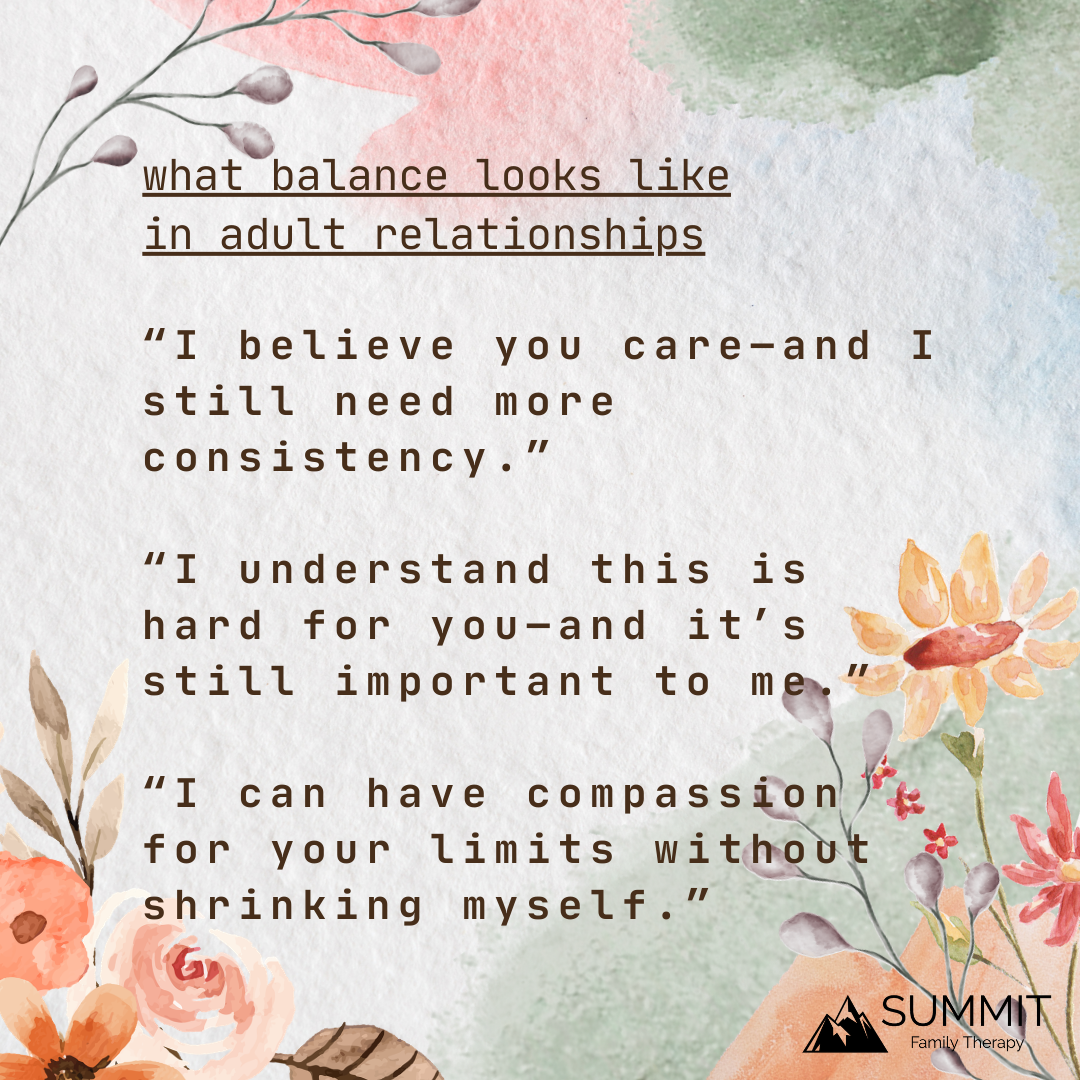
A balanced approach sounds like:
“I believe you care—and I still need more consistency.”
“I understand this is hard for you—and it’s still important to me.”
“I can have compassion for your limits without shrinking myself.”
It also means recognizing when something is a mismatch, not a moral failure.
Not every unmet need means someone is unwilling.
Not every explanation means you should stay.
Final Thoughts
Relationships are complex because people are complex.
When we cling too tightly to “if they wanted to, they would,” we risk oversimplifying human behavior and losing empathy.
When we lean too heavily on grace, we risk losing ourselves.
The healthiest relationships live in the tension—where honesty and compassion coexist, where needs are named, and where effort flows in both directions.
You are allowed to expect care.
You are allowed to offer grace.
And you are allowed to walk away when both cannot exist together.