

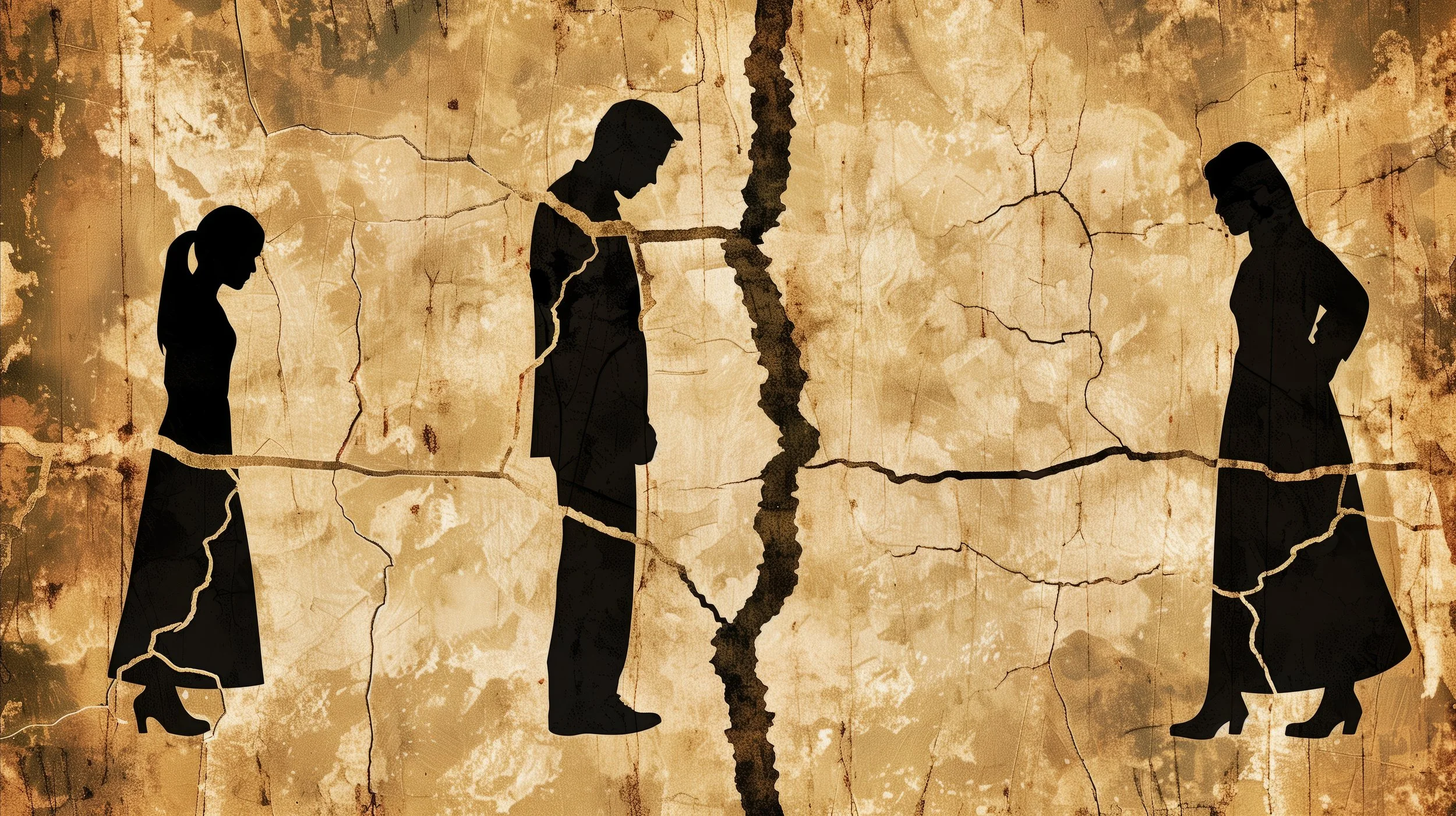
Estrangement and Fractured Families
Family estrangement is one of the most emotionally painful and least openly discussed experiences individuals face across the lifespan. Estrangement is commonly defined as the cessation or significant reduction of regular contact between two or more family members (Agllias, 2017). While often assumed to be permanent, estrangement can be fluid—relationships may move in and out of periods of distance, reconciliation, and renewed rupture over time.
Family estrangement is one of the most emotionally painful and least openly discussed experiences individuals face across the lifespan. Estrangement is commonly defined as the cessation or significant reduction of regular contact between two or more family members (Agllias, 2017). While often assumed to be permanent, estrangement can be fluid—relationships may move in and out of periods of distance, reconciliation, and renewed rupture over time.
Despite its prevalence, estrangement remains highly stigmatized. Many individuals hesitate to speak about fractured family relationships due to the pervasive cultural belief that others have “perfect families.” This silence can deepen feelings of shame, isolation, and self‑doubt, particularly when the estrangement was not mutually chosen.
One‑Sided Estrangement and Adult Child–Parent Relationships
Estrangements can be especially difficult when they feel one‑sided, such as when an adult child decides that the relationship with a parent is too emotionally harmful or complex to maintain. Adult children may choose distance to protect themselves from ongoing conflict, criticism, boundary violations, or unresolved trauma. Parents, in turn, may experience confusion, grief, anger, or disbelief, interpreting the cutoff as rejection or betrayal rather than self‑preservation.
Research suggests that many adult‑initiated estrangements stem from longstanding relational patterns rather than isolated events, including unmet emotional needs, poor communication, or perceived lack of acceptance (Carr et al., 2015).
Intergenerational Patterns of Estrangement
For some families, estrangement is not an isolated occurrence but part of a repeating intergenerational cycle—grandfather to father, father to son. These patterns often reflect unresolved family trauma, rigid relational roles, or inherited beliefs about power, loyalty, and closeness. Without intervention or conscious effort, these fractured dynamics can be unintentionally passed down, normalizing emotional cutoff as a means of conflict resolution.
Values Conflicts and Fear of Rejection
Fear of estrangement may also arise before a rupture occurs, particularly when an adult child makes lifestyle choices that differ sharply from parental values. Differences related to identity, relationships, religion, cultural norms, or personal beliefs can strain family bonds. Individuals may feel torn between authenticity and belonging, asking themselves:
Is it better to stand firm when I cannot change my beliefs, or can I continue to love someone while not approving of their decisions?
These tensions highlight the complexity of family relationships and the emotional labor required to balance personal integrity with relational connection.
Emotional Impact of Estrangement
Family estrangement can evoke emotions similar to ambiguous loss—grief without closure. Individuals may experience sadness, guilt, anger, relief, or a confusing mix of all four. Holidays, life milestones, and social comparisons often intensify this pain, reinforcing the sense of being “different” or excluded from a societal ideal of family unity (Boss, 2006).
Moving Forward: Care, Compassion, and Support
Regardless of the specific circumstances, it is essential to recognize that family estrangement is more common than commonly acknowledged—and that those experiencing it are not alone. Prioritizing self‑care, establishing supportive relationships outside the family system, and seeking professional counseling can help individuals process grief, clarify boundaries, and navigate decisions around contact or reconciliation.
Healing does not require minimizing pain or forcing forgiveness. Instead, it involves honoring one’s emotional experience, cultivating self‑compassion, and making choices that support long‑term well‑being.
References
Agllias, K. (2017). Missing families: The adult child’s experience of parental estrangement. Journal of Social Work Practice, 31(4), 459–474. https://doi.org/10.1080/02650533.2017.1326476
Boss, P. (2006). Loss, trauma, and resilience: Therapeutic work with ambiguous loss. W. W. Norton & Company.
Carr, K., Holman, A., Abetz, J., & Kellas, J. (2015). Giving voice to the silence of family estrangement. Journal of Family Communication, 15(2), 135–152. https://doi.org/10.1080/15267431.2015.1013106
Hill, J. (2023). Family estrangement: Establishing boundaries and navigating loss. Psychology Today. https://www.psychologytoday.com

Can You Fix Your Family?
I have noticed a significant reoccurring pattern in several of my client’s stories these past few weeks and thought it might be helpful to share my thoughts on this with others.
There are some amazing families out there who are loving, securely attached, have healthy boundaries, and fulfill individual emotional needs in balanced ways.
The short answer is no. You cannot fix your family.
I have noticed a significant reoccurring pattern in several of my client’s stories these past few weeks and thought it might be helpful to share my thoughts on this with others.
There are some amazing families out there who are loving, securely attached, have healthy boundaries, and fulfill individual emotional needs in balanced ways. They handle big feelings and give grace for the human imperfections that are in even the best of us. They address conflicts and repair hurts in relationships. Yet, many of the adult clients who end up in my office do not come from such a family. Often, a big part of their recovery is identifying patterns they learned from their family of origin, such as attachment styles, communication, and handling conflict.

I love this quote from Brené Brown, Rising Strong, about an exercise that she does with people:
“Folks write down the name of someone who fills them with frustration, disappointment, and/or resentment, and then I propose that their person is doing the best he or she can. The responses have been wide-ranging...One woman said, 'If this was true and my mother was doing the best she can, I would be grief-stricken. I'd rather be angry than sad, so it's easier to believe she's letting me down on purpose than grieve the fact that my mother is never going to be who I need her to be.'"
The bad news is that you cannot heal the dysfunction in the family you grew up in. If that was hard to read, read it again. It is not your role to save your parents/caregivers now, nor should it ever have been your job growing up. Let that responsibility go. It is keeping you stuck, sick, and sad. Maybe they will change and maybe they won’t. It is not up to you and it never was.
There is a very real grief process that comes along with the acceptance of that reality. All of us have expectations and dreams about what we hope life looks like, and this includes our family relationships. To lead healthy and wholehearted lives, we must make peace with the very real limits of others.
The good news is that you can change your own life.
You can grow.
You can parent differently and stop those generational patterns.
You can accept yourself as worthy of love and belonging.
You can freely give empathy because of the struggles you endured.
You are not doomed to repeat the past.
You can learn new ways to communicate.
You can set boundaries.
You can take the good parts of your family and limit the parts that are harmful.
You can make a new family.
You can cultivate authentic relationships based on love, emotional/physical safety, deep connection, grace, compassion, courage, joy, and showing up for each other. Not sure where to start? Give our office a call at 309-713-1485.

Holiday Survival Guide
As children, we often look to the holidays with anticipation and wonder. Like you, I have fond memories of twinkling Christmas lights, crackling fires, Thanksgiving feasts, and waking up to gifts under the tree. As adults, the holidays stir up more than pleasant sentiments. During the holiday season, we are reminded of hurt and loss. The void left by dear friends and family members during holiday celebrations is agonizingly felt.
Holiday Survival Guide
As children, we often look to the holidays with anticipation and wonder. Like you, I have fond memories of twinkling Christmas lights, crackling fires, Thanksgiving feasts, and waking up to gifts under the tree. As adults, the holidays stir up more than pleasant sentiments. During the holiday season, we are reminded of hurt and loss. The void left by lost friends and family members during holiday celebrations is agonizingly felt. Preparing for family visits, coordinating meals, sleeping arrangements, and transportation can really leave one’s head spinning. The stress of cramming several people into one house, and the ensuing drama can be emotionally draining. On the other hand, the lack of companionship during the holidays can be excruciatingly painful. Add the constant bombardment of ads for toys, appliances and electronic gadgets and gizmos, and you have a recipe for a monster 30-day headache. Here are five tips that I share with my clients on how to weather the holiday season:
This too shall pass.
Acknowledging your stress or pain during the holidays is your first step. Do not try to minimize or shove away what you’re feeling. Painful memories hurt and it’s okay to hurt. There’s nothing wrong with you when feeling grief or stress during the holidays. Listen to your body. You’re hurting for a reason, so honor and acknowledge it, then practice self care. Also, know that these feelings will pass.
Take time for yourself.
It’s very easy to get caught up in hustle and bustle of the holidays. Simply by the shear nature of running around to stores, planning, cooking, managing kids off from school, you will experience physical and emotional fatigue. Make sure that you plan time for yourself. This may look like going for a walk, sneaking away to watch a show, or reading a book. If you can, find time to exercise. Getting your heart rate up will help you feel better, and you will have some time to decompress.
Set clear boundaries.
It’s okay to say, "No." When family visits, we can get caught up in taking care of others or in family drama. If you feel overwhelmed, or you are placed in an uncomfortable situation, say, "No." People will respect you more when you hold firm to your boundaries. In any case, it’s important that you communicate your feelings with your loved ones. Let them know when you are tired and need a breather. If you have children, I would encourage you to work with your spouse to keep on the same page when parenting. Children can also feel the stressful energy, and they may test your boundaries in response. With children, be clear and consistent with consequences for inappropriate behaviors.
Participate in service.
Consider planning a service project for your family. There’s nothing like getting in the holiday spirit like thinking of others above yourself. This can also be a great teachable moment for your children about humility and sacrifice. In addition, if you are spending the holidays alone, service can help you stay active and keep your mind occupied in healthy ways. Who knows who you’ll meet?
Set a budget.
It’s very easy to blow your budget. Develop a plan and stick to it. Our culture is built on instant gratification and making emotional decisions, and the holidays are filled with emotion. Do not fall into the trap of emotional spending or using purchases to self sooth. This will never end well, and you will more than likely experience a large helping of buyer’s remorse.